
Last updated September 22, 2026
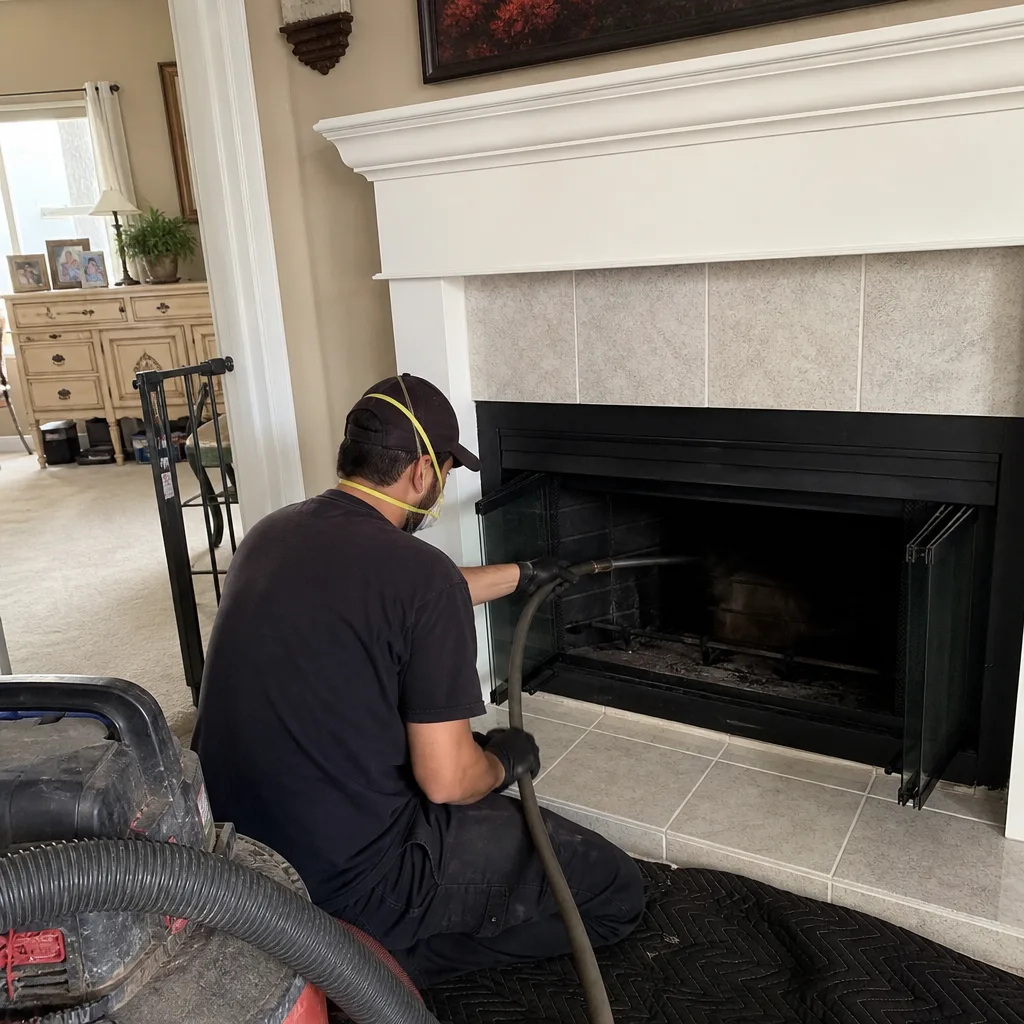
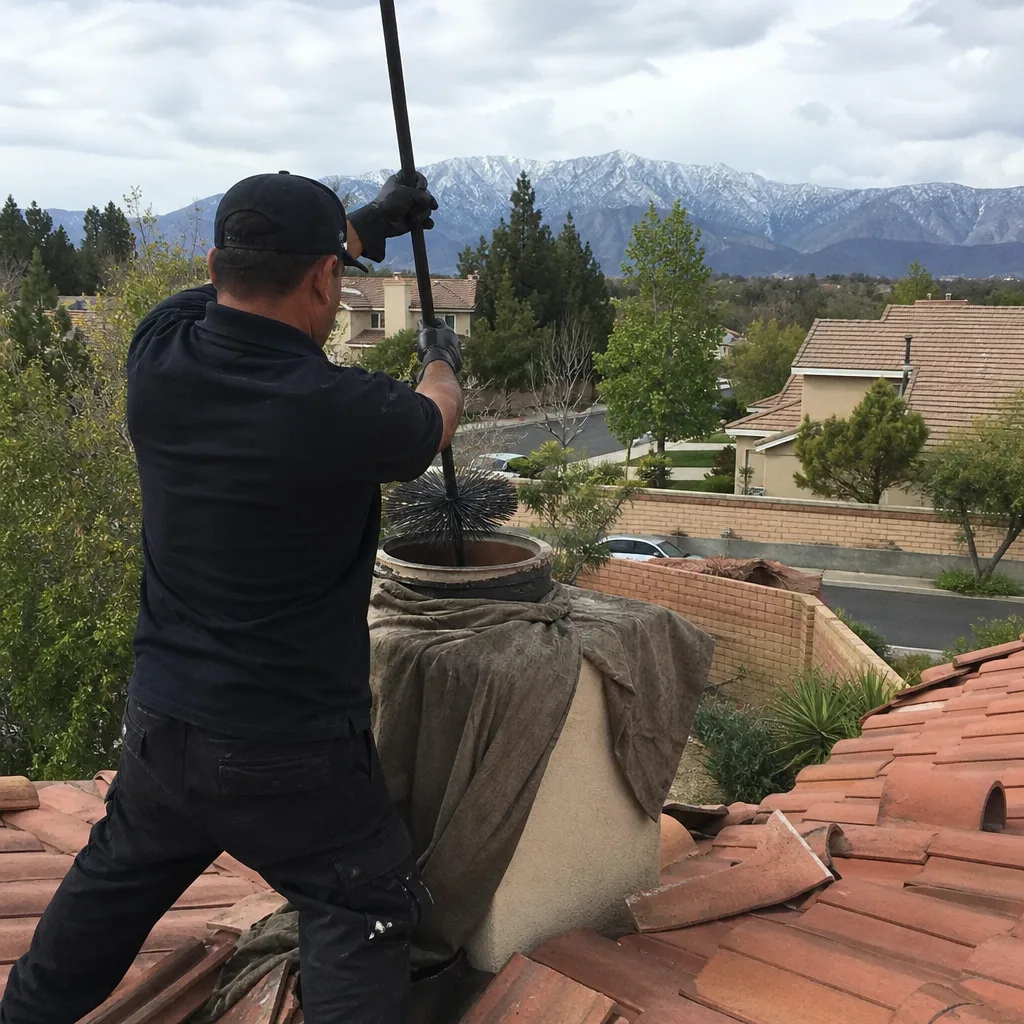
Level 1 sweep and inspection to the NFPA 211 annual standard - flue, crown, cap, and flashing checked and photographed
Chimney sweep logs do not sweep chimneys. They loosen some creosote - which then falls where a brush and vacuum still have to collect it.
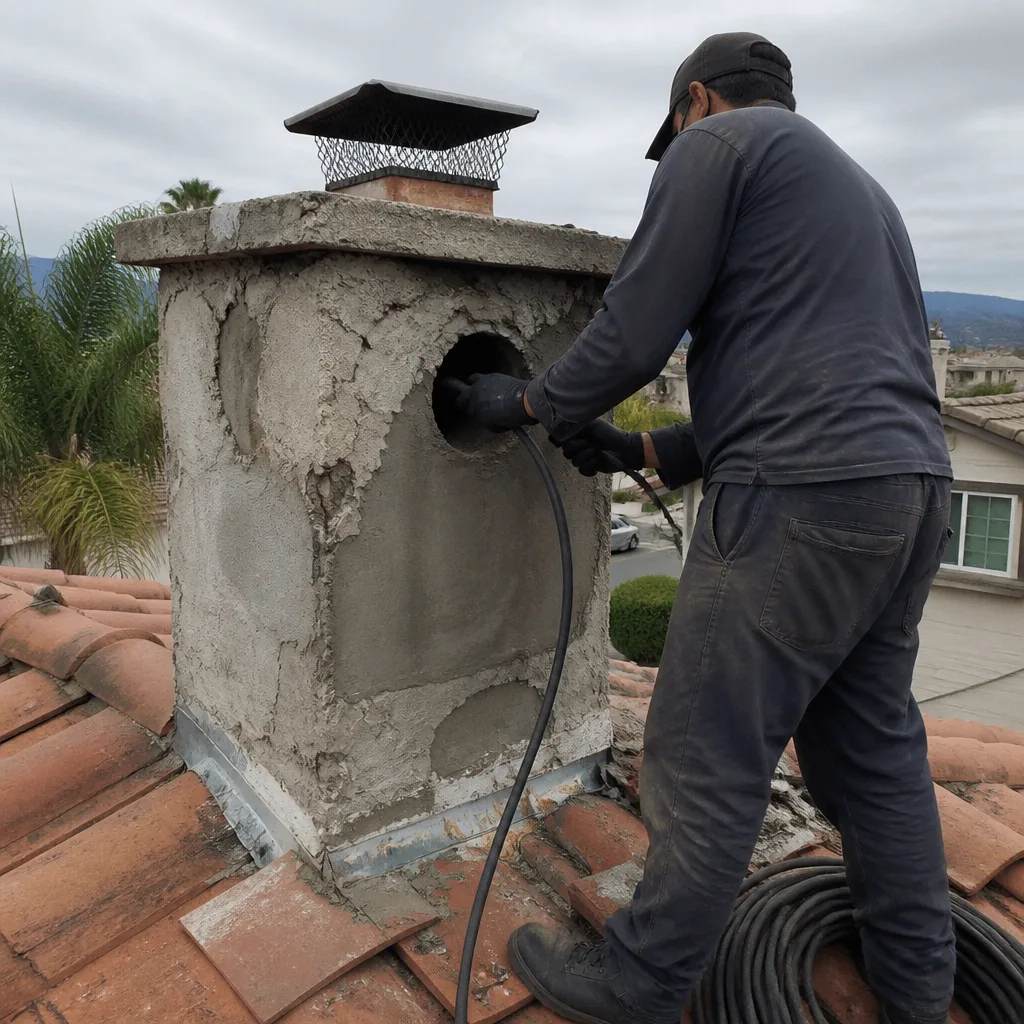 Before
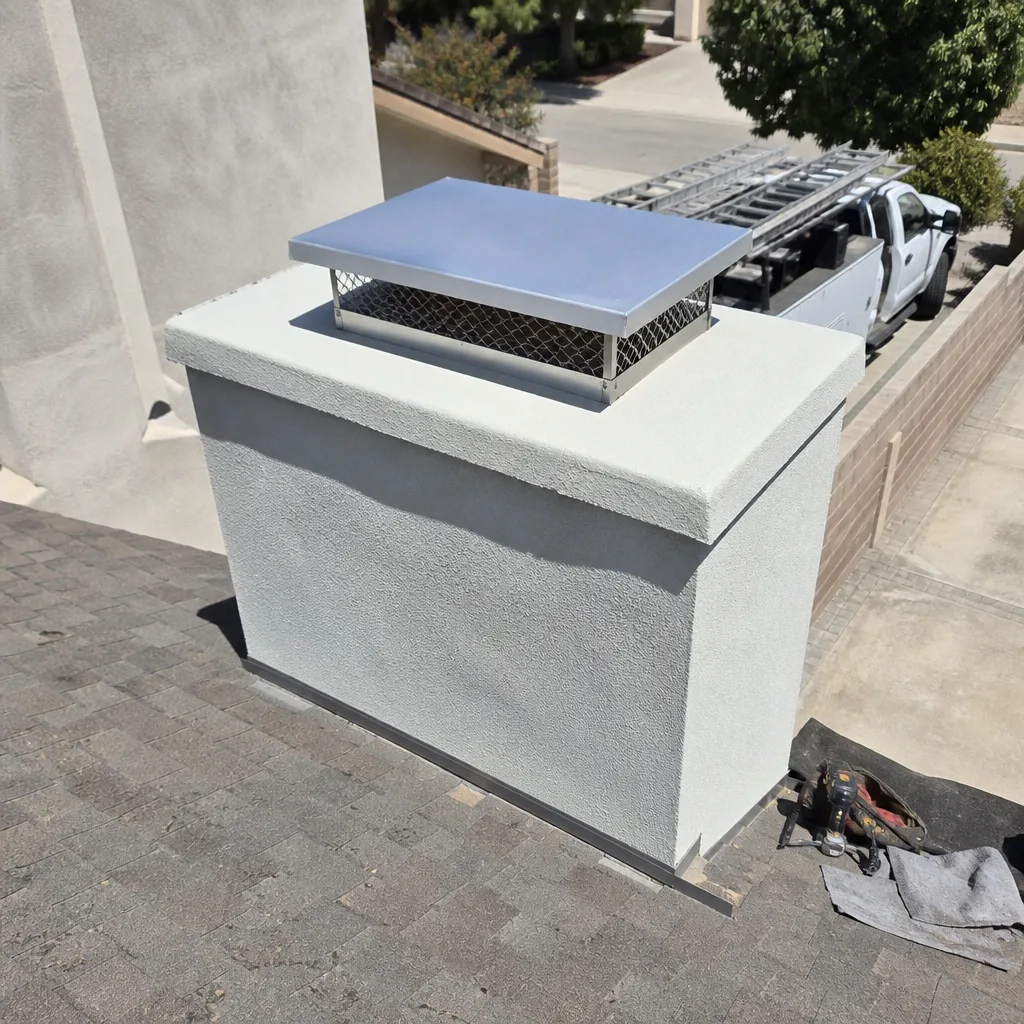 After
After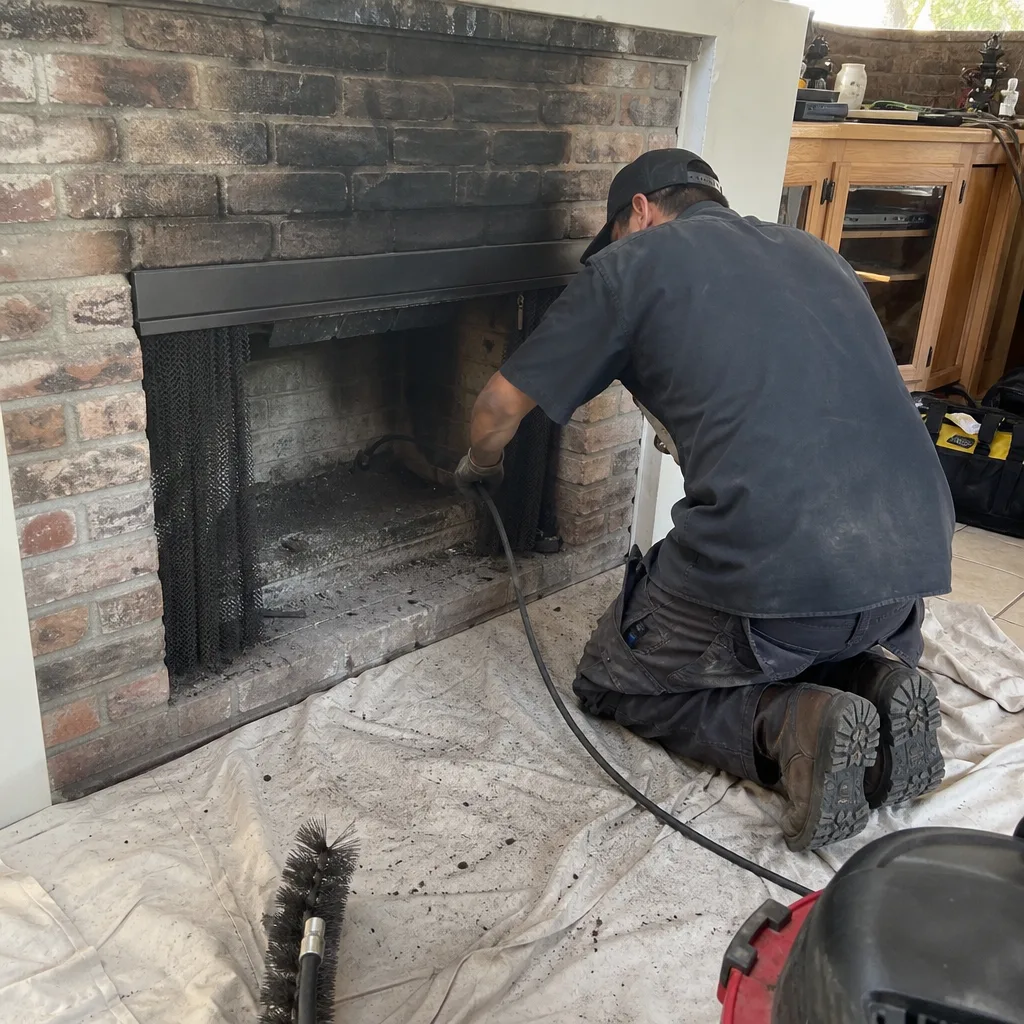 Before
 After
After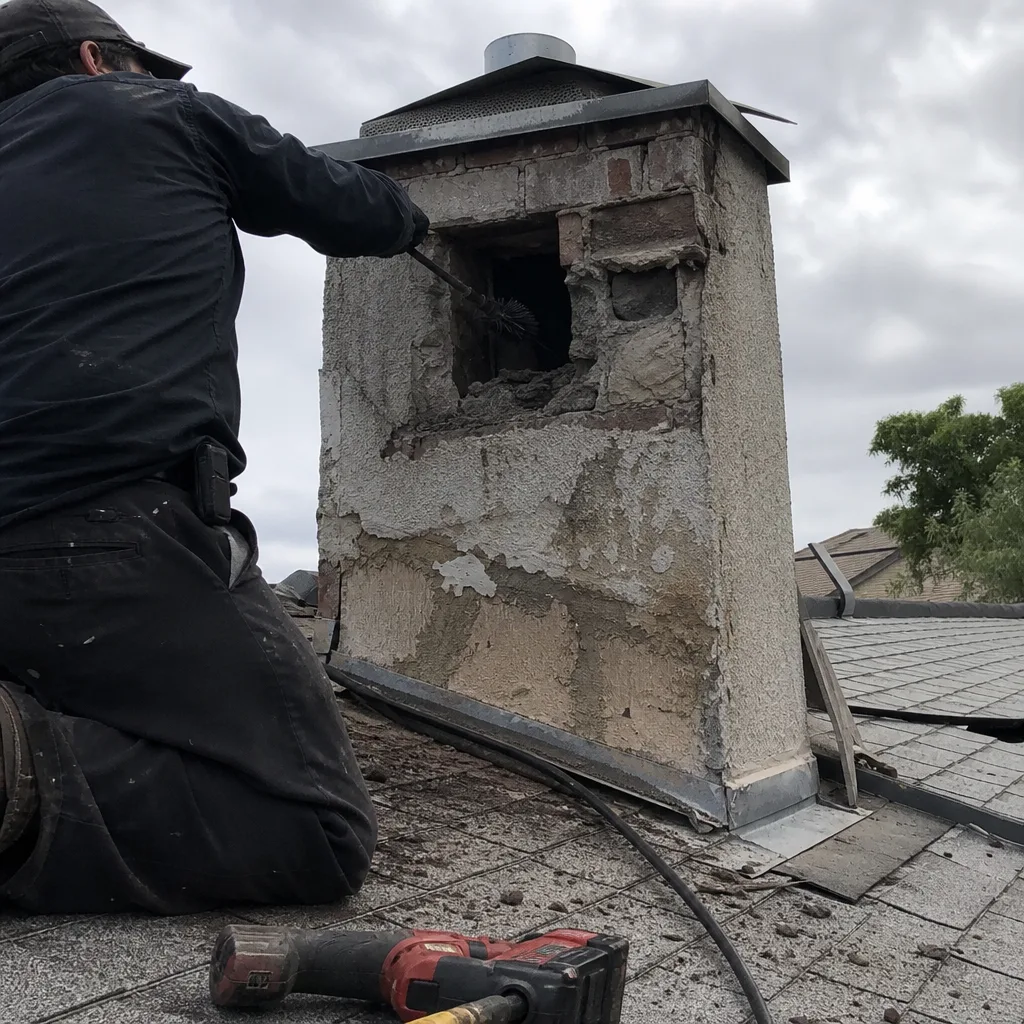 Before
 After
AfterChimney Cleaning & Sweep Maintenance Checklist for Rancho Cucamonga Homeowners
Most Rancho Cucamonga homeowners book Chimney Cleaning & Sweep services because the calendar says October, not because anything specific needs attention. That’s backward. A flashlight glance from the firebox and a verbal “looks fine” costs roughly the same $189-$279 appointment fee as a full NFPA 211 Level 2 camera inspection, yet produces zero documentation your insurance company or home inspector will accept. Since 2009, we’ve completed more than 38,000 chimney inspections across the Inland Empire, and the pattern is consistent: the chimneys that fail catastrophically are the ones that passed a casual annual look for years without anyone documenting what “pass” actually meant. This guide gives you a room-by-room, season-by-season inspection protocol with specific pass/fail criteria - so you know what you’re paying for, what you’re walking away with, and when a finding means the next fire is off-limits.
Quick Answer
A complete chimney maintenance checklist for Rancho Cucamonga homes includes three layers: homeowner-visible checks from the firebox and roofline (performed seasonally), a professional camera-scan inspection of the flue liner and smoke chamber (performed based on burning habits, not calendar date), and documented photo records with written findings filed after every visit. In Rancho Cucamonga’s climate, eucalyptus debris accumulation, terracotta liner thermal stress from summer heat cycles, and cap screen corrosion from desert wind grit require specific attention that generic checklists miss.
Table of Contents
- Part 1: Homeowner Checks - Firebox, Hearth, and Roofline
- Part 2: What Only a Camera Scan Can Confirm
- Rancho Cucamonga-Specific Hazards: Climate and Vegetation
- The Burning Log: How to Track Habits and Predict Cleaning Intervals
- Documentation Standards: What Your Sweep Must Leave Behind
- Five Stop-Work Findings: When the Next Fire Is Off-Limits
- Season-by-Season Maintenance Schedule
- What Chimney Maintenance Costs in Rancho Cucamonga
BeforeAfterPart 1: Homeowner Checks - Firebox, Hearth, and Roofline
You don’t need tools to catch the problems that matter most. What you need is a consistent routine, performed at the same intervals, with criteria specific enough that “looks okay” becomes “pass” or “fail.”
Firebox and Hearth Inspection (Monthly During Burning Season)
Stand at the firebox opening with a flashlight aimed at the back wall. You’re looking for three specific conditions:
- Firebrick integrity: Tap each brick lightly with a metal tool handle. A hollow ring indicates the mortar behind has failed - a “fail” that allows heat to reach combustible framing. In our experience across Rancho Cucamonga’s Etiwanda and Alta Loma neighborhoods, homes built between 1985 and 2005 show this failure pattern more frequently due to the rapid-dry mortar mixes common in that construction period.
- Smoke shelf and damper operation: Open the damper fully. It should move smoothly without grinding or catching. Look up at the smoke shelf (the flat ledge above the damper) - any visible accumulation of soot more than 1/8 inch thick is a “fail.” This surface catches falling debris and is a common ignition point for chimney fires.
- Hearth extension cracks: The non-combustible surface in front of the firebox must extend at least 16 inches (18 inches if the firebox opening exceeds 6 square feet). Hairline cracks in tile or stone are acceptable; gaps wider than 1/16 inch that pass through to the subfloor are a “fail.”
Exterior Roofline Inspection (Quarterly, Especially After Santa Ana Events)
From the ground with binoculars, or from a secure ladder position if you’re comfortable with heights, examine:
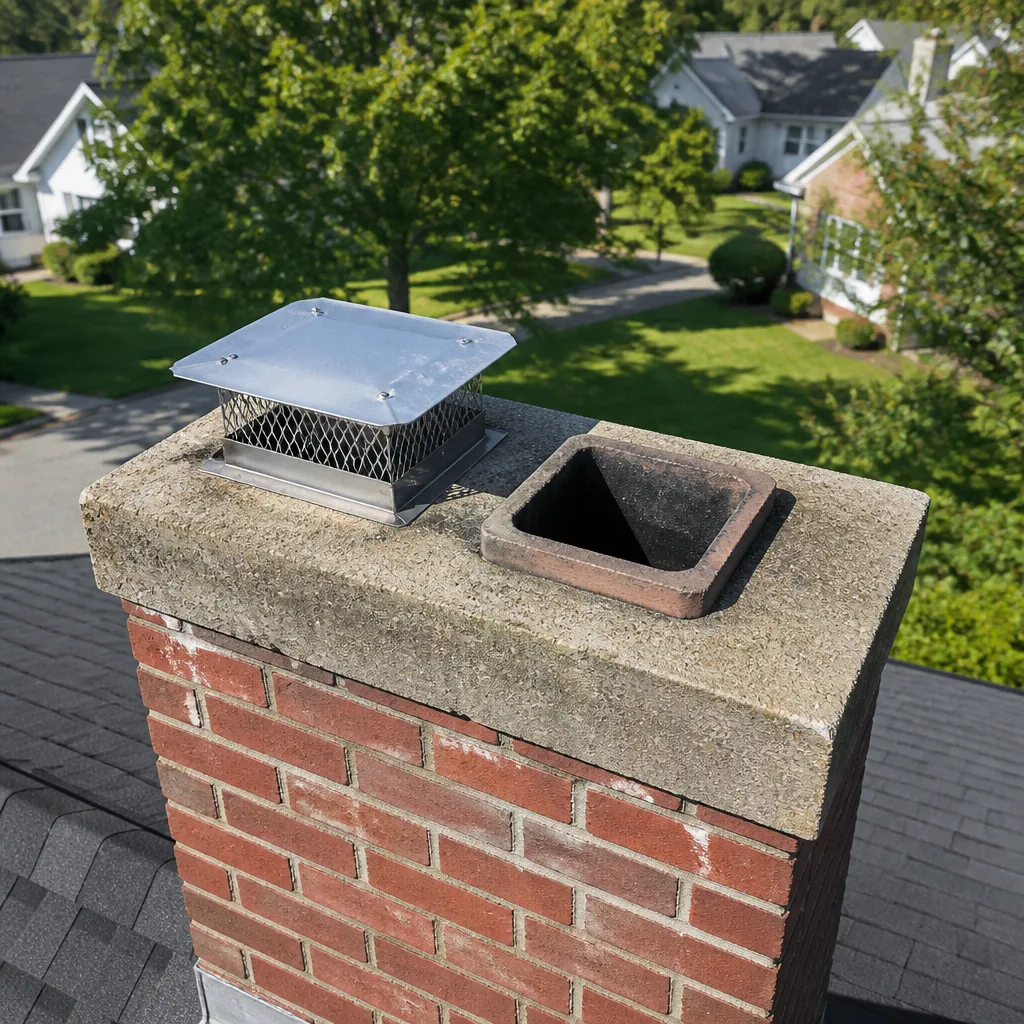
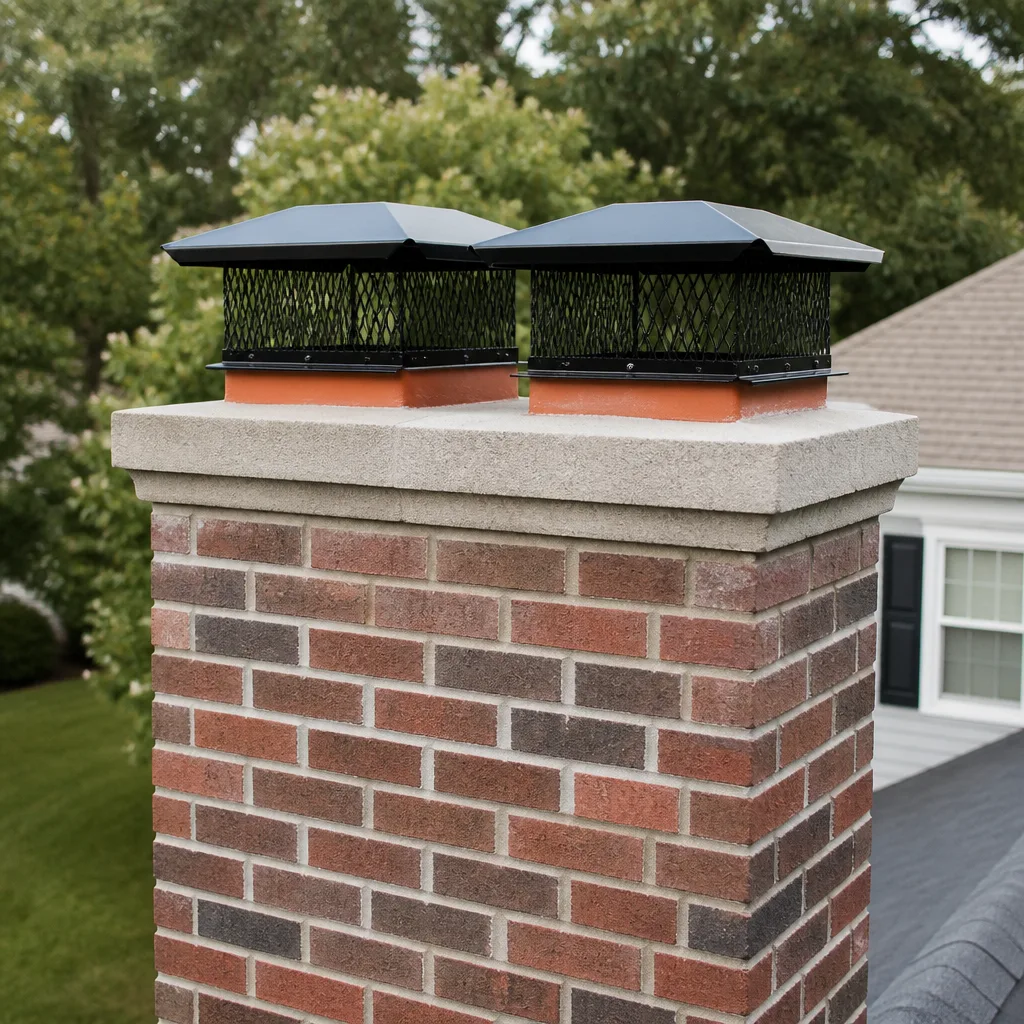
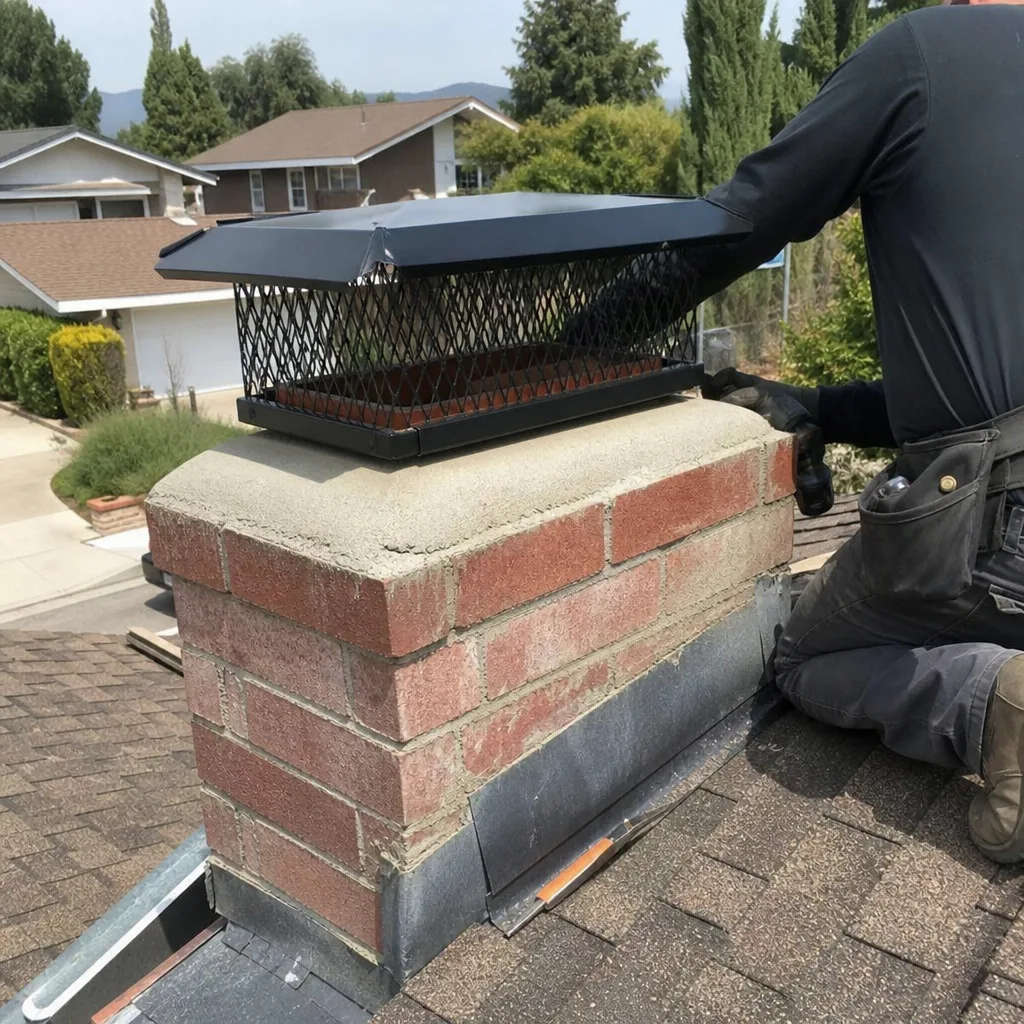
- Cap and screen condition: The mesh spark arrestor should be intact with openings no larger than 5/8 inch. In Rancho Cucamonga, desert wind grit accelerates corrosion at screen welds - we’ve replaced caps on 12-year-old homes that failed in coastal climates at 20 years. Look for rust streaks on the chimney face below the cap.
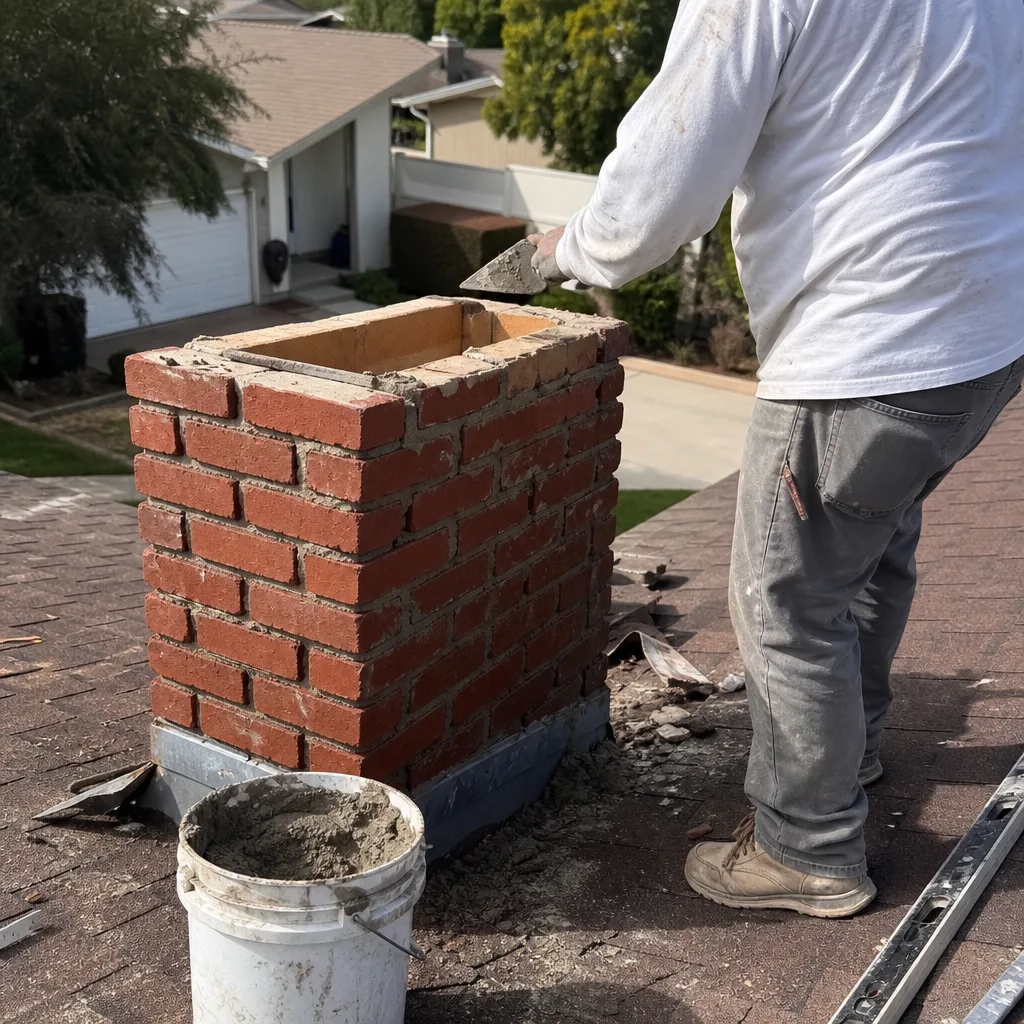
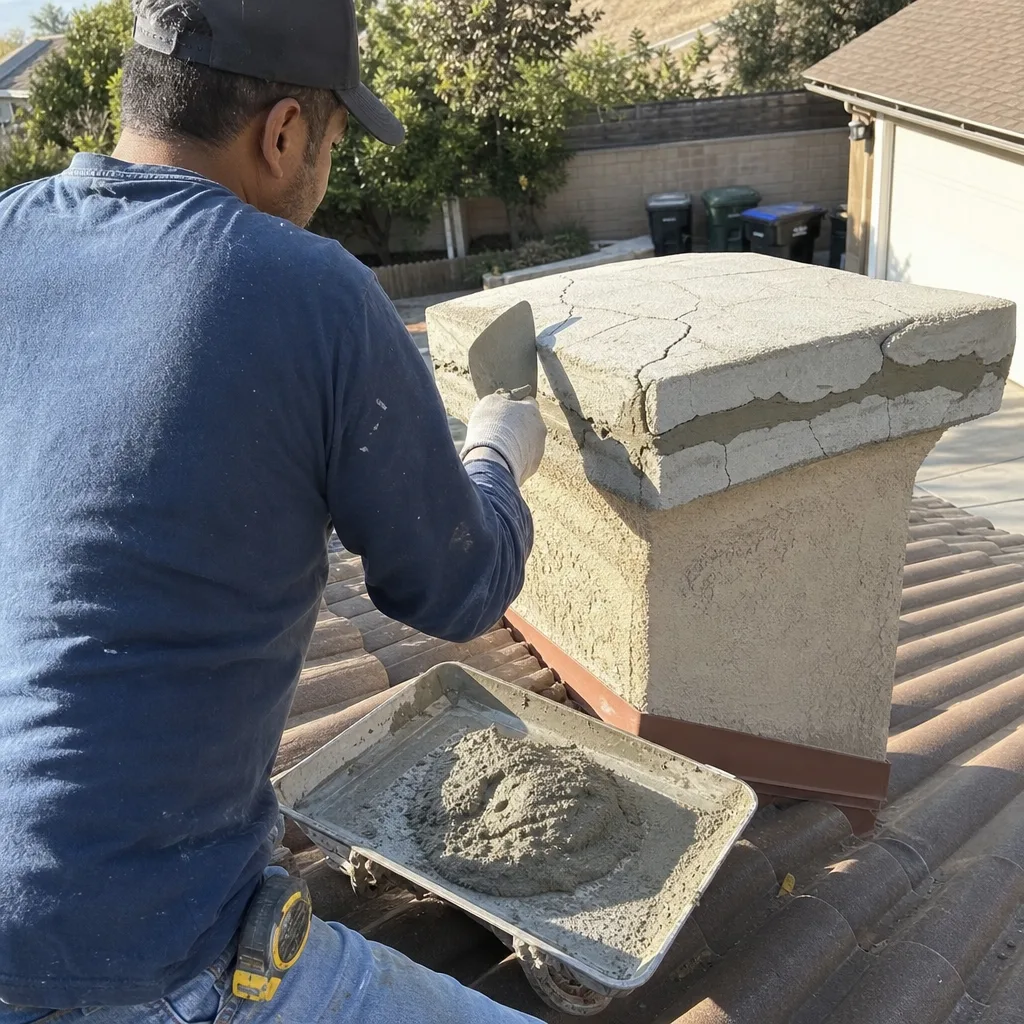
- Crown integrity: The concrete crown (the slab topping the brickwork) should overhang the chimney body by at least 2 inches with a drip edge. Cracks wider than 1/4 inch, or any crack that runs to the flue tile edge, are a “fail” - water intrusion here destroys liners from the top down.
- Flashing condition: The metal where chimney meets roof should lie flat without lifted edges or visible sealant gaps. After Santa Ana wind events, which peak November through January in the Inland Empire, this is the most common leak point we address in Rancho Cucamonga calls.
Document each inspection with dated phone photos. If any item fails, schedule a professional inspection before the next fire - no exceptions.
Part 2: What Only a Camera Scan Can Confirm
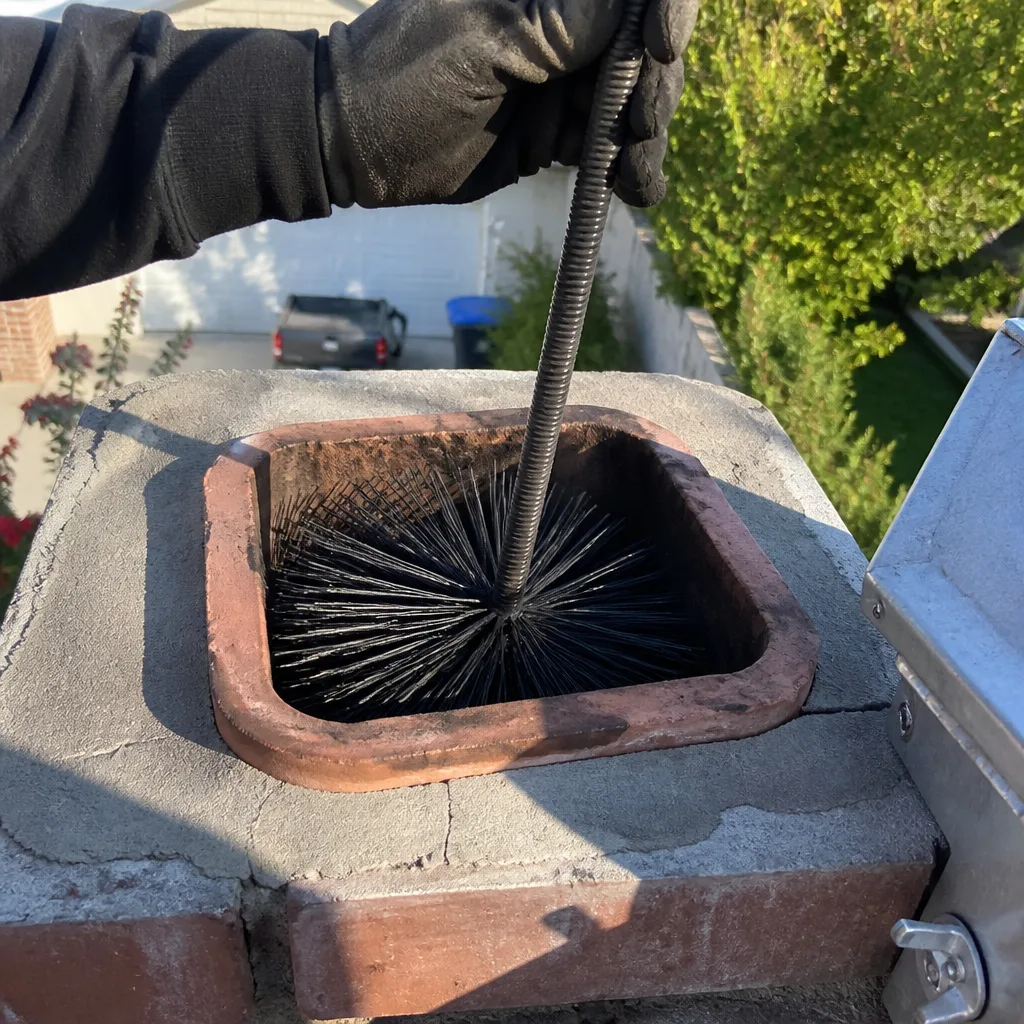
The homeowner checks above catch surface problems. What they cannot catch - and what causes the fires that make local news - lives inside the flue, hidden from any flashlight or mirror.
An NFPA 211 Level 2 inspection requires a high-resolution camera lowered the full length of the flue. At Chimney Cleaning & Sweep in Rancho Cucamonga, this is our default on every visit, not an upgrade. Here’s what the camera reveals that no visual inspection can:
Flue Liner Condition
The liner protects combustible framing from flue gases and contains chimney fires if they occur. Camera inspection identifies:
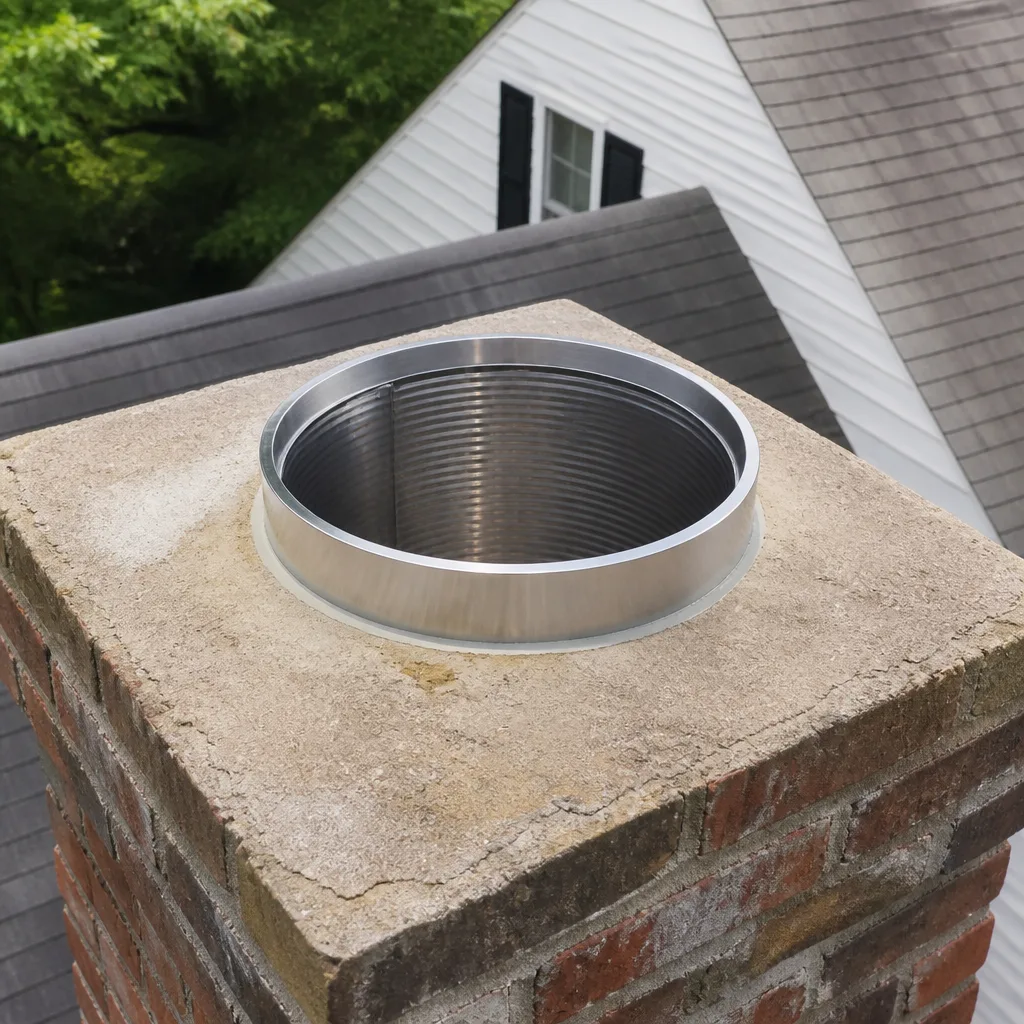
- Vertical cracking in terracotta: Common in Rancho Cucamonga due to thermal shock - summer attic temperatures exceeding 140°F followed by winter fire cycles stress clay tile. A single crack through to the outer wall is a “fail” requiring liner replacement or relining.
- Spalling (flaking) of liner surfaces: Creates gaps that allow creosote accumulation behind the liner, a hidden fire hazard.
- Shifting or settled liner sections: Often caused by minor seismic activity common to the Cucamonga fault zone; gaps between sections exceeding 1/2 inch fail NFPA standards.
Smoke Chamber Construction and Condition
The smoke chamber (the area above the damper that funnels smoke into the flue) is invisible without camera access. Parged (smoothed) surfaces should show no exposed corbelled brick - rough brick in this zone creates turbulence that deposits creosote and reduces draft. In homes built before 1980 in Rancho Cucamonga’s older central neighborhoods, unparied smoke chambers are common and represent a significant creosote accumulation risk.
Creosote Classification and Thickness
Not all creosote is equal. The camera documents:
- Class I: Sooty, powdery, easily brushed - normal accumulation, swept routinely.
- Class II: Granular, crunchy, requires rotary tools - indicates condensed flue gases from smoldering fires.
- Class III: Glazed, tar-like, hardened to the liner - highly combustible, requires chemical treatment before mechanical removal. This is the material of chimney fires.
Only camera measurement can distinguish Class II from Class III when buildup exceeds 1/8 inch, the threshold at which NFPA 211 recommends cleaning.
Rancho Cucamonga-Specific Hazards: Climate and Vegetation
Generic chimney advice assumes a temperate, humid climate with deciduous trees. Rancho Cucamonga’s conditions produce distinct failure patterns that our checklist must address specifically.
Eucalyptus and Palm Debris Accumulation
The mature eucalyptus stands in neighborhoods like Victoria Gardens and the older sections of North Rancho Cucamonga shed bark strips year-round. These strips are lightweight, oil-rich, and highly flammable - they accumulate on chimney crowns, in cap screens, and occasionally fall directly into uncapped flues. Our protocol: inspect the crown and cap weekly during peak shed (May through July), and never operate without a screened cap. We’ve documented chimney fires in Rancho Cucamonga traced directly to eucalyptus bark ignition in the flue.
Terracotta Liner Thermal Stress
Rancho Cucamonga’s summer attic temperatures regularly exceed 130°F, with peak days reaching 150°F in unventilated spaces. Terracotta flue liners expand in heat and contract in winter when the first fire is lit. This thermal cycling produces vertical “check” cracks invisible from the firebox but readily apparent on camera. In our 38,000+ inspections, homes in Rancho Cucamonga show this pattern at roughly 1.5 times the rate of coastal Orange County properties of similar age. The camera scan isn’t optional here - it’s diagnostic.
Cap Screen Corrosion From Desert Wind Grit
Santa Ana winds transport fine mineral grit from the Mojave and Coachella Valley. This grit impacts cap screens at velocity, stripping protective coatings and accelerating galvanic corrosion at weld points. Stainless steel caps (we source through Famco and Copperfield for Rancho Cucamonga installations) outlast galvanized steel by a factor of three in this environment. A corroded screen with openings exceeding 5/8 inch fails to stop sparks and admits birds, which nest and obstruct flues.
Seismic Considerations
The Cucamonga fault zone runs directly through the city. Minor seismic events, often unfelt, shift chimney structures over time. We inspect for:
- Fresh mortar cracks in the chimney body, especially stair-step patterns
- Separated chimney from roofline (visible gap at flashing)
- Tilted or rotated chimney caps
Any of these findings trigger a Level 2 camera inspection even if the last sweep was recent.
The Burning Log: How to Track Habits and Predict Cleaning Intervals
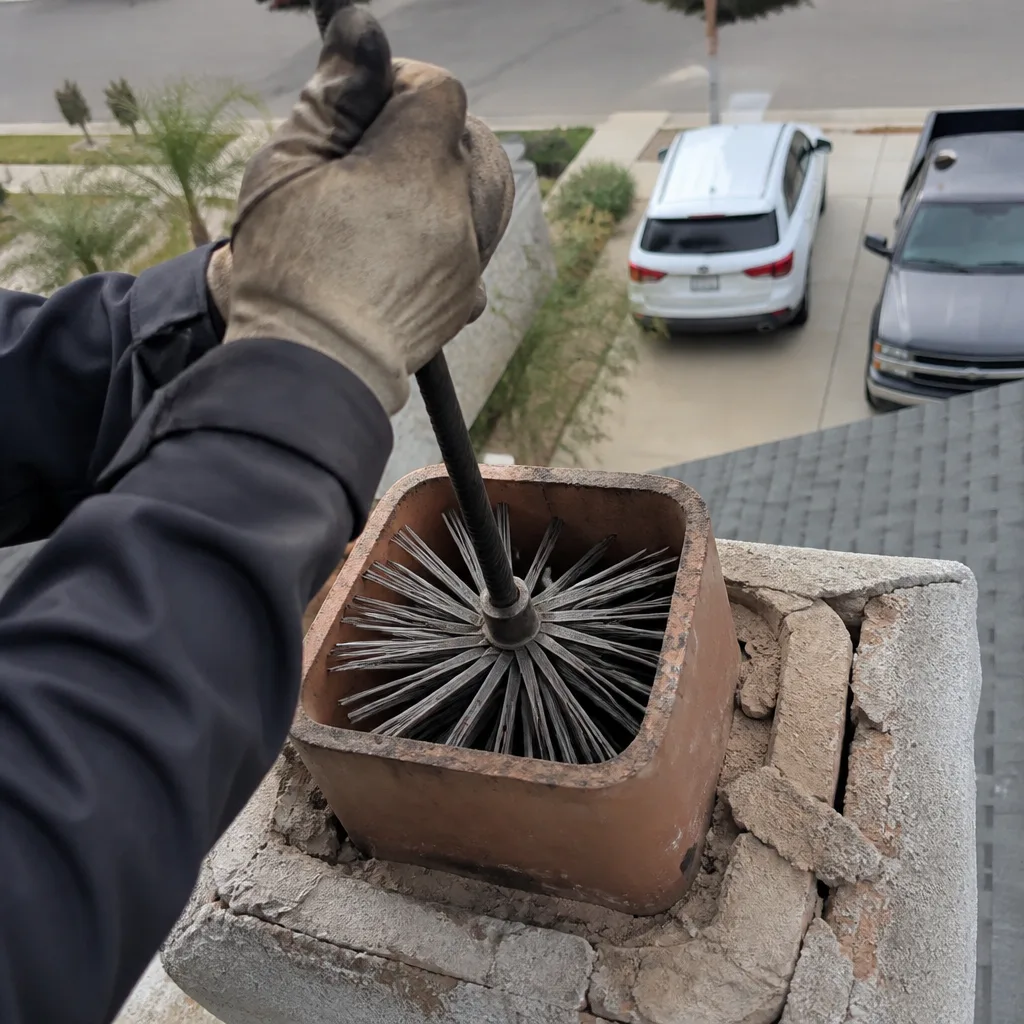
The “sweep annually” rule is a rough average, not a schedule. Your actual cleaning interval depends on what you burn, how you burn it, and how often. We’ve developed a simple logging system, detailed in The Complete Guide to Chimney Cleaning in Rancho Cucamonga, that homeowners can use to predict when a sweep is actually needed, rather than defaulting to an arbitrary date.
The Three Variables
Track these in any notebook or phone app:
- Fuel type and moisture content: Seasoned hardwood (oak, almond, walnut - common in the Inland Empire) under 20% moisture produces minimal creosote. Unseasoned wood, construction scraps, or pallet wood (frequently burned in Rancho Cucamonga due to warehouse industry proximity) produce Class II and III creosote rapidly.
- Fire frequency and duration: A “fire night” is any evening the fireplace operates for 3+ hours. Weekly fire nights from November through March produce different accumulation than daily use.
- Approximate fuel load per fire: Estimate in pounds. A typical Rancho Cucamonga fireplace load is 15-25 pounds. Heavier loads with restricted air (smoldering for overnight heat) produce more creosote than hot, fast burns.
The Decision Threshold
Multiply fire nights by average load weight to get “fire-pounds” per season. Our field data from Rancho Cucamonga homes:
- Under 500 fire-pounds annually: Camera inspection every 2-3 years, sweep as indicated by camera findings.
- 500-1,500 fire-pounds annually: Annual camera inspection; sweep typically needed annually.
- Over 1,500 fire-pounds annually: Inspection and probable sweep every burning season; consider this a heavy-use system requiring closer monitoring.
A household burning 20-pound loads twice weekly for 20 weeks generates 800 fire-pounds - squarely in the annual inspection category. The homeowner who burns pallet scraps from the warehouse district three times weekly hits 1,500+ fire-pounds and needs more frequent attention.
Bring your burning log to your appointment. It informs where we look and what we expect to find, making the camera inspection more efficient and the findings more meaningful.
Documentation Standards: What Your Sweep Must Leave Behind
A sweep without documentation is a handshake without a contract. Under Clause 4 of the Haven Standard, which we’ve applied to every job since 2009, you receive specific materials that create a record for insurance, resale, and your own reference.
Required Documentation on Every Visit
- Dated photo set: Minimum 12 images covering firebox, damper, smoke chamber, full flue length (camera stills), crown, cap, and exterior condition. These are your baseline for comparison at the next inspection.
- Written findings report: Specific observations, not generic “chimney is safe” language. “Terracotta liner shows vertical check crack at 8 feet, 3 o’clock position, approximately 4 inches long, not through to outer wall” is actionable; “chimney looks good” is not.
- Written scope and price confirmation: Before any work begins, a document stating exactly what will be done, for what price, with what warranty. This is Haven Standard Clause 1 - “Have it in writing.” No exceptions, no “we’ll figure it out when we get there.”
- Completed work record: What was done, materials used (including manufacturer when applicable - we document DuraFlex liner sections, HeatShield applications, or Gelco cap installations specifically), and technician signature.
- Warranty document: The 365-Day Done Right Promise, stamped and dated. If it’s not done right, we make it right.
Filing for Insurance and Resale
Homeowner’s insurance claims after chimney fires are routinely denied when no inspection record exists. Create a physical and digital file:
- Store paper records in a fireproof document box (ironic but essential)
- Back up digital photos to cloud storage with date-stamped folder names
- Note the technician name and company license number - our license information is displayed on every page and provided in writing on every job
At resale, a documented inspection history with photo evidence distinguishes a maintained system from an unknown quantity. In Rancho Cucamonga’s competitive 2020-2025 housing market, this documentation has helped our clients justify asking prices and avoid buyer-requested credits.
Five Stop-Work Findings: When the Next Fire Is Off-Limits
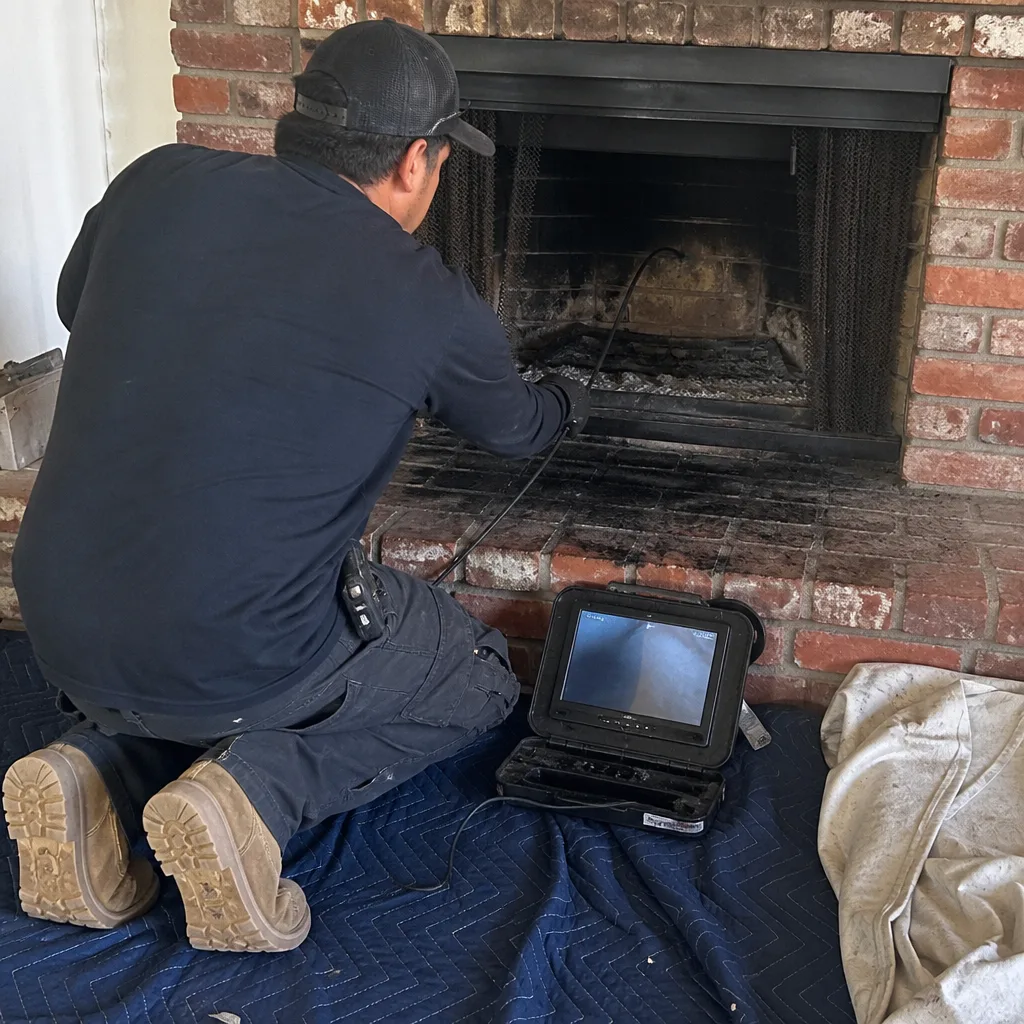
Some findings mean pause, not proceed. If you observe any of these during your homeowner checks, or if your sweep reports them, no fire until resolved:
- Visible flame or glowing ember visible from outside the firebox: Indicates a breach in the liner or firebox allowing direct flame contact with combustibles. This is an active fire emergency - extinguish, evacuate, call 911 if flames are visible in walls or attic, then call for inspection.
- Damper that will not fully open or close: A stuck-open damper wastes energy and admits wildlife; a stuck-closed damper forces smoke and carbon monoxide into the living space. Either condition makes operation unsafe.
- Cracked or displaced flue liner segment visible from the firebox: Even if small, this indicates structural failure that will propagate. The camera inspection determines extent, but operation stops now.
- Soot or creosote accumulation falling into the firebox during inspection: Indicates significant buildup above that has exceeded the liner’s capacity. A falling chunk of Class III creosote can ignite on the hearth.
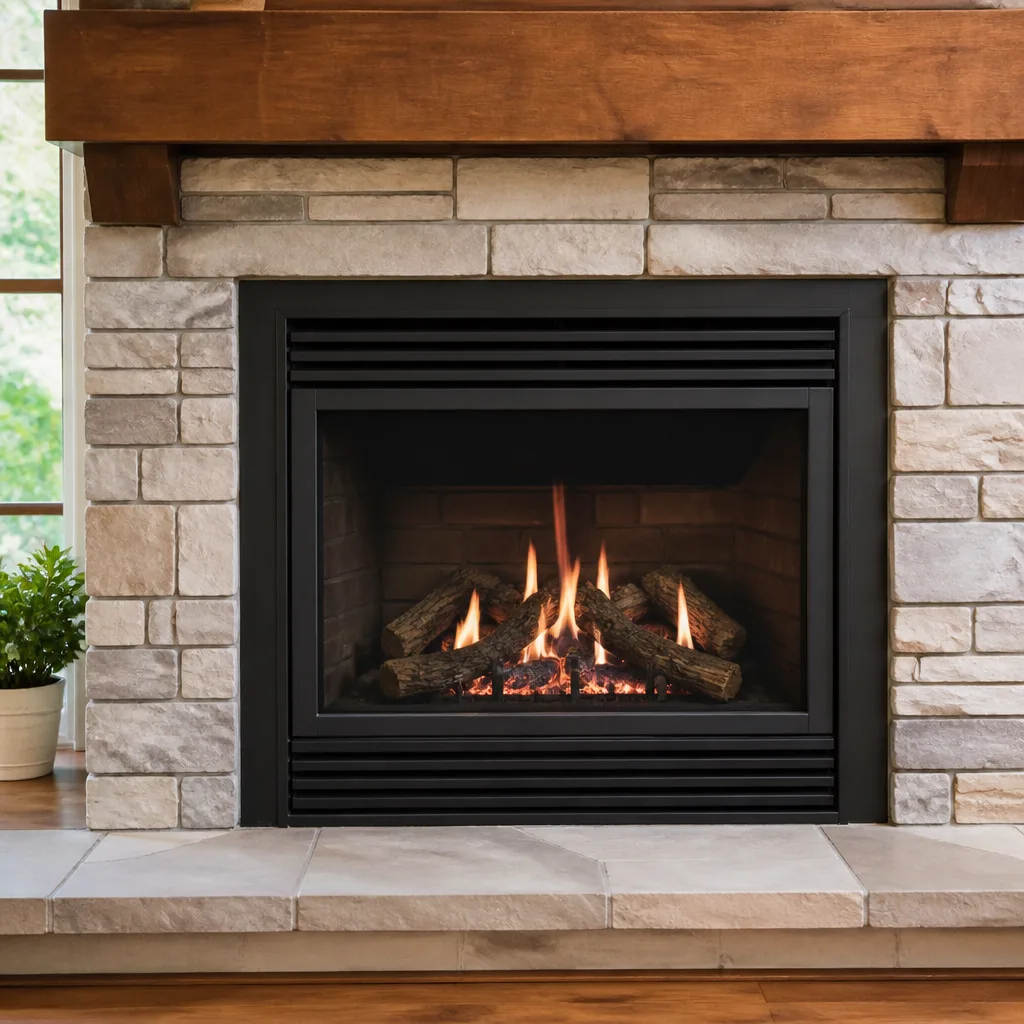
- Any odor of gas or petroleum in a gas-log fireplace: Natural gas and propane are heavier than air; accumulation in the firebox or hearth area indicates a leak in the supply line, valve, or burner. Evacuate, do not operate switches (sparks ignite gas), call the gas utility emergency line from outside.
These are not “monitor and see” conditions. They are stop-work, schedule repair, document the finding. At Chimney Repair in Rancho Cucamonga, we prioritize these calls and provide same-week inspection when reported.
Season-by-Season Maintenance Schedule
Rancho Cucamonga’s climate allows a predictable rhythm. Adapt this to your burning log data, but use the seasons as structural reminders.
September-October: Pre-Season Inspection and Sweep
Schedule your NFPA 211 Level 2 inspection before the first cold snap drives demand. This timing ensures:
- Availability for camera scheduling (October fills first)
- Resolution of any findings before Thanksgiving and holiday use
- Verification that summer heat cycling hasn’t damaged terracotta liners
Perform your homeowner firebox and roofline checks now, before calling, so you can report specific observations.
November-January: Active Burning with Ongoing Monitoring
During peak season:
- Run the monthly firebox checklist
- Check cap and crown after each Santa Ana wind event
- Log every fire night with fuel type and approximate load
- Watch for performance changes: smoking at startup, longer kindling time, odors - all indicate creosote accumulation or draft problems
February-March: Post-Season Assessment
After your last fire:
- Perform final homeowner inspection while details are fresh
- Calculate total fire-pounds for the season
- Schedule next inspection based on accumulation rate, not calendar
- Address any deferred maintenance before spring rains test crown and flashing integrity
April-August: Off-Season Maintenance and Repair Window
This is when we schedule liner replacements, crown rebuilds, and cap installations in Rancho Cucamonga. Materials from our Haven buying network (DuraFlex, HeatShield, Gelco, Olympia Chimney, Famco, and Copperfield) are readily available, crews are less pressured, and you’ll have documentation ready for fall. Summer heat also tests repaired crowns and flashings under stress - if they leak now, they’ll hold in winter.
What Chimney Maintenance Costs in Rancho Cucamonga
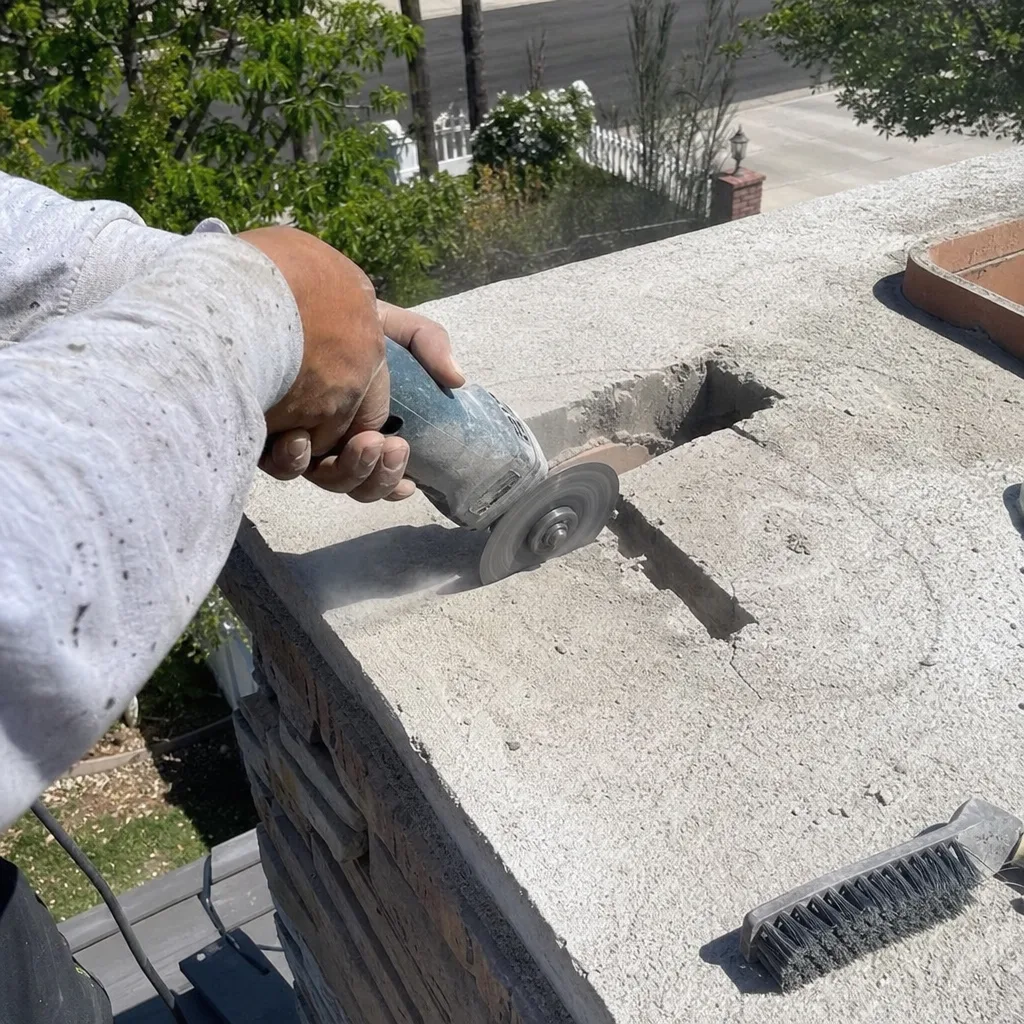
Specific pricing matters. These are the ranges we quote in writing before work begins, based on Rancho Cucamonga market conditions and our Haven Standard pricing through the buying network.
| Service | Typical Range | What’s Included |
|---|---|---|
| NFPA 211 Level 2 Inspection with Camera Scan | $189 – $279 | Full flue camera inspection, firebox and exterior evaluation, 12+ photo documented record, written findings report |
| Chimney Sweep (Class I Creosote) | $149 – $219 | Mechanical brushing of flue, smoke chamber, and firebox; debris removal; post-sweep camera verification |
| Chimney Sweep (Class II/III Creosote) | $279 – $449 | Rotary or chemical treatment as needed, extended labor, post-treatment camera verification |
| Stainless Steel Cap with Screen (standard flue) | $289 – $429 | Famco or Copperfield cap, custom fit, installation, 5-year warranty |
| Crown Repair (minor crack sealing) | $199 – $349 | Surface prep, flexible crown sealant, drip edge verification |
| Crown Rebuild (structural failure) | $749 – $1,249 | Form and pour new concrete crown, proper overhang and slope, 10-year warranty |
| Flue Liner Repair (HeatShield application) | $1,200 – $2,400 | Smoke chamber parge, flue resurfacing, camera verification of seal |
| Stainless Steel Liner Installation (DuraFlex) | $2,800 – $4,500 | Custom-measured DuraFlex liner, insulation, top plate, bottom connection, full documentation |
These ranges reflect Rancho Cucamonga’s market - labor costs, permit requirements, and material availability specific to San Bernardino County. We do not quote over the phone without knowing your system; we do provide a written, itemized price before any work begins, always, with no exceptions. Bring a competitor’s written estimate for our Free Second Opinion - we’ll review their scope against what we find and explain any differences.
For Fireplace Services in Rancho Cucamonga including gas log maintenance, burner adjustment, and insert service, pricing is project-specific and quoted in writing on inspection.
Common Mistakes to Avoid
- Assuming “annual sweep” means annual camera inspection: Many Rancho Cucamonga sweeps brush the flue and leave without camera documentation. You paid for a service that produces no record. Insist on the camera, insist on the photos, insist on Clause 4 compliance.
- Burning pallet wood from warehouse discards: The Inland Empire’s logistics industry generates abundant free pallet wood. It’s also treated with methyl bromide, stacked with unknown contaminants, and produces accelerated Class III creosote. The savings evaporate in accelerated cleaning costs and liner damage.
- Ignoring the crown because “it’s just concrete”: Crown failure is the single most expensive deferred maintenance item we see in Rancho Cucamonga. A $249 seal at year 10 prevents a $1,100 rebuild at year 15.
- Scheduling based on calendar, not condition: The household that burns four times yearly doesn’t need the same schedule as the household burning four times weekly. Log your fires, calculate your fire-pounds, inspect based on accumulation.
- Accepting verbal “all clear” without written findings: Verbal assurances are unverifiable and unenforceable. Your insurance company will not accept them. Your home inspector will not accept them. Get it in writing, every time.
- DIY cap screen repair with hardware cloth: Improper mesh size (too large, no spark arrestor function; too small, clogs with Rancho Cucamonga’s fine dust) and galvanic corrosion with dissimilar metals create hazards. Use specified stainless steel caps from known manufacturers.
- Delaying inspection after a chimney fire: Even a “small” chimney fire (loud popping, dense smoke, acrid odor) causes liner damage invisible without camera. Schedule Level 2 inspection before the next fire - the liner that survived one fire may not survive a second with compromised integrity.
When to Call a Professional
Call for a professional NFPA 211 Level 2 inspection when: your homeowner check produces any “fail” result; you detect performance changes (smoking, odors, draft weakness); you’ve had a chimney fire or significant seismic event; you’re purchasing a home and the seller provides no inspection history; or your burning log indicates you’ve exceeded your predicted cleaning threshold.
Emberly Chimney Cleaners Rancho Cucamonga home offers free estimates throughout Rancho Cucamonga - call (909) 430-9243. Calls are answered by a live person 24 hours a day, 7 days a week. You’ll speak with someone who can schedule your camera inspection, explain what documentation you’ll receive, and confirm that your written price will arrive before any work begins. Background-checked, uniformed technicians are assigned by name, and you’ll receive a text when yours is en route.
Frequently Asked Questions
A standard chimney sweep for Class I creosote in Rancho Cucamonga typically runs $149 to $219, including mechanical brushing of the flue, smoke chamber, and firebox plus post-sweep camera verification. Class II or III creosote requiring rotary or chemical treatment ranges from $279 to $449. Every job includes a written price before work starts and a documented photo record on completion. Call (909) 430-9243 for a free estimate - we’ll ask about your burning habits and give you a specific range for your situation.
Frequency depends on burning habits, not calendar date. A household burning seasoned hardwood under 500 “fire-pounds” annually needs camera inspection every 2-3 years with sweeping as indicated. Households burning 500-1,500 fire-pounds annually typically need annual inspection and probable sweep. Heavy users exceeding 1,500 fire-pounds should inspect and likely sweep every burning season. Rancho Cucamonga’s dry climate and frequent Santa Ana winds don’t directly affect creosote formation, but they do accelerate cap and crown deterioration that requires more frequent exterior monitoring. Track your fires and let the data drive your schedule.
You need liner replacement or relining only when camera inspection documents specific failure: cracks through to the outer wall, spalling that exposes liner backing, shifted sections with gaps exceeding 1/2 inch, or deterioration that compromises the liner’s ability to contain flue gases and potential chimney fires. We do not recommend liner work without camera evidence you can see yourself. In some cases, HeatShield resurfacing repairs minor cracking without full replacement. In Rancho Cucamonga, terracotta liner thermal stress from summer attic heat is the most common cause of failure we document. Every recommendation comes with written findings, photos, and a Free Second Opinion on any competitor’s written estimate.
Skipped maintenance produces three predictable outcomes, in order of severity: reduced efficiency and smoking due to creosote-restricted draft; chimney fire from ignited creosote accumulation, which can reach 2,000°F and crack liners or penetrate to combustible framing; and carbon monoxide intrusion through liner breaches, particularly dangerous because CO is odorless and symptoms mimic flu. In Rancho Cucamonga’s tightly sealed modern homes, CO accumulation happens faster than in drafty older construction. The camera inspection that prevents these outcomes costs a fraction of the emergency response, repair, or health consequence that follows neglect.
A Level 1 inspection is a visual examination of readily accessible portions of the chimney exterior, interior, and connections - essentially what you can see with a flashlight from the firebox and ground level. A Level 2 inspection, required by NFPA 211 when property changes hands, after a chimney fire, or when any modification is made, includes everything in Level 1 plus camera examination of the full flue length, inspection of the attic and crawl space where accessible, and evaluation of clearances from combustibles. At Emberly Chimney Cleaners, we perform Level 2 as our default because the additional information is essential and the cost difference is minimal compared to the value of documentation produced.
Homeowners can perform the surface checks in Part 1 of this guide and maintain burning logs to predict cleaning intervals. Mechanical sweeping of the flue requires specialized rotary equipment for Class II and III creosote, and camera verification to confirm the flue is actually clean rather than merely brushed. More critically, only trained technicians can evaluate liner condition, smoke chamber construction, and clearance compliance that determine whether the system is safe to operate. We do not provide DIY sweeping instructions because improper technique can damage liners, leave hazardous deposits, or create a false sense of security. The documentation produced by professional service - photos, written findings, warranty - also serves insurance and resale purposes that DIY cannot replicate.
The Bottom Line
A chimney maintenance checklist works only when it produces pass/fail decisions and documented evidence, not vague reminders. For more guides & resources on keeping your system safe, explore our blog. For Rancho Cucamonga homeowners, that means combining your own seasonal checks of firebox, hearth, and roofline with professional camera inspections timed to your actual burning habits, not an arbitrary calendar. The specific hazards of this climate - eucalyptus debris, terracotta thermal stress, wind-driven corrosion - require attention that generic advice misses. And every professional interaction must leave you with photos, written findings, and a written price, not a verbal “looks fine.”
We’ve applied these standards through more than 38,000 inspections since 2009. The Haven Standard was built from what we learned: have it in writing, arrive verified, document everything, and make it right if it’s not. That’s the checklist that protects your home, your insurance claim, and your peace of mind - which, despite our avoidance of the phrase, is exactly what accurate documentation provides.
Ready to schedule your NFPA 211 Level 2 inspection? Call (909) 430-9243 for a free estimate. Written price before work starts. Documented photo record on every visit. The 365-Day Done Right Promise on every job. Live person answering, 24 hours a day.
Written by Corrine Halstead, Owner at Emberly Chimney Cleaners Rancho Cucamonga, serving Rancho Cucamonga since 2009.