
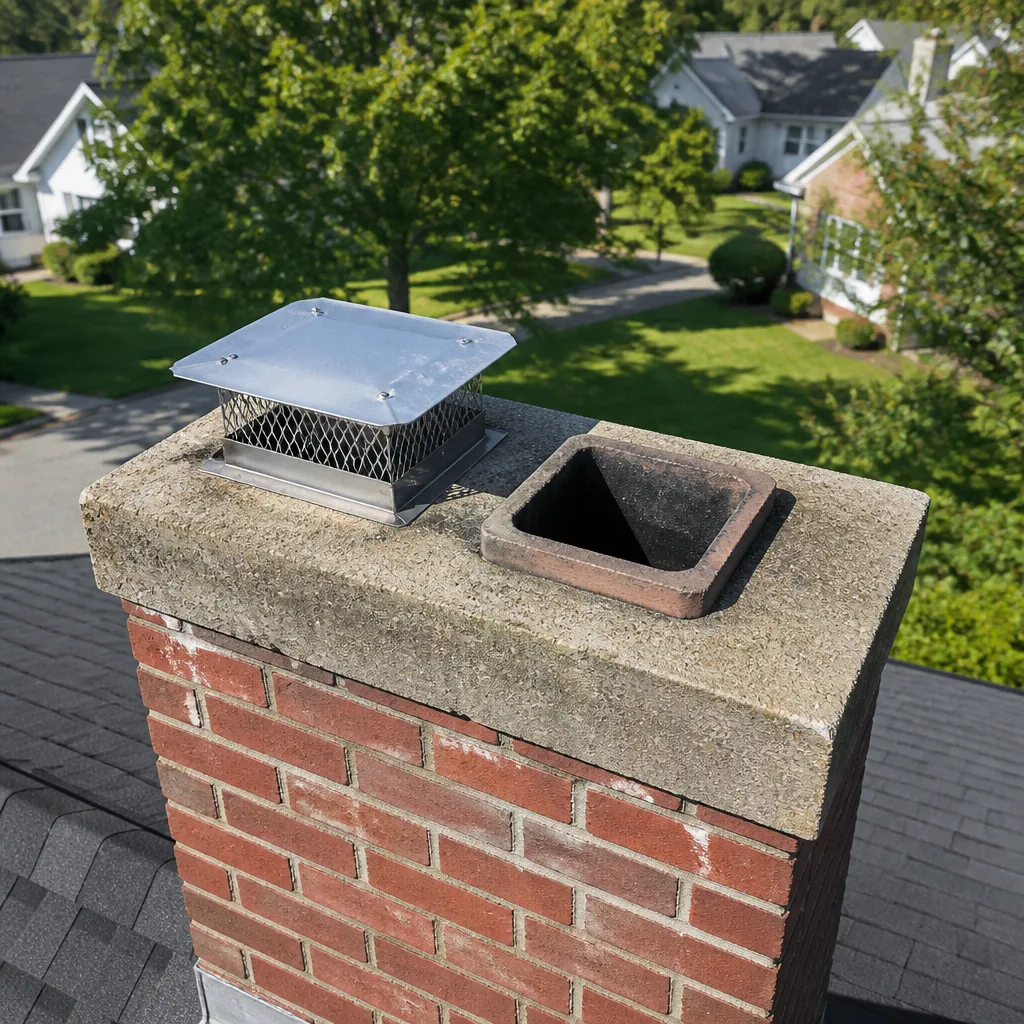
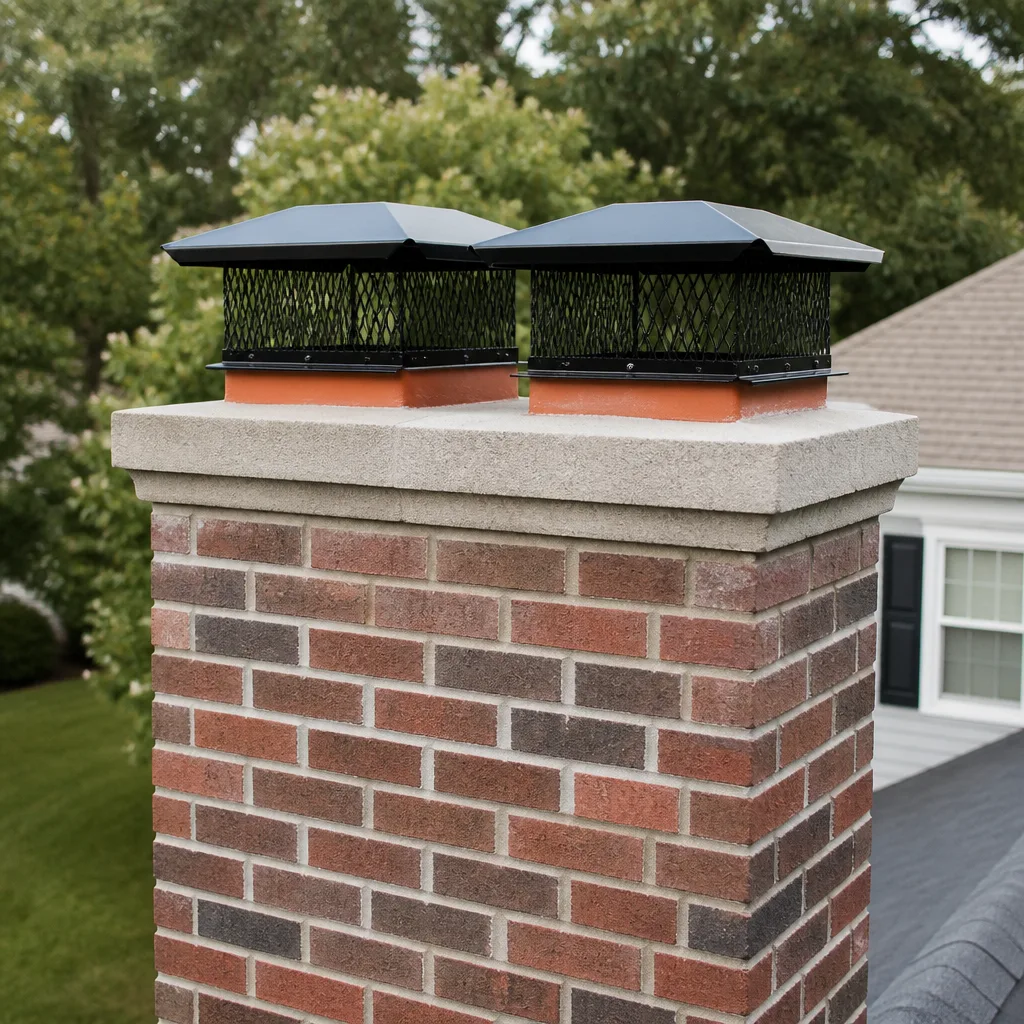
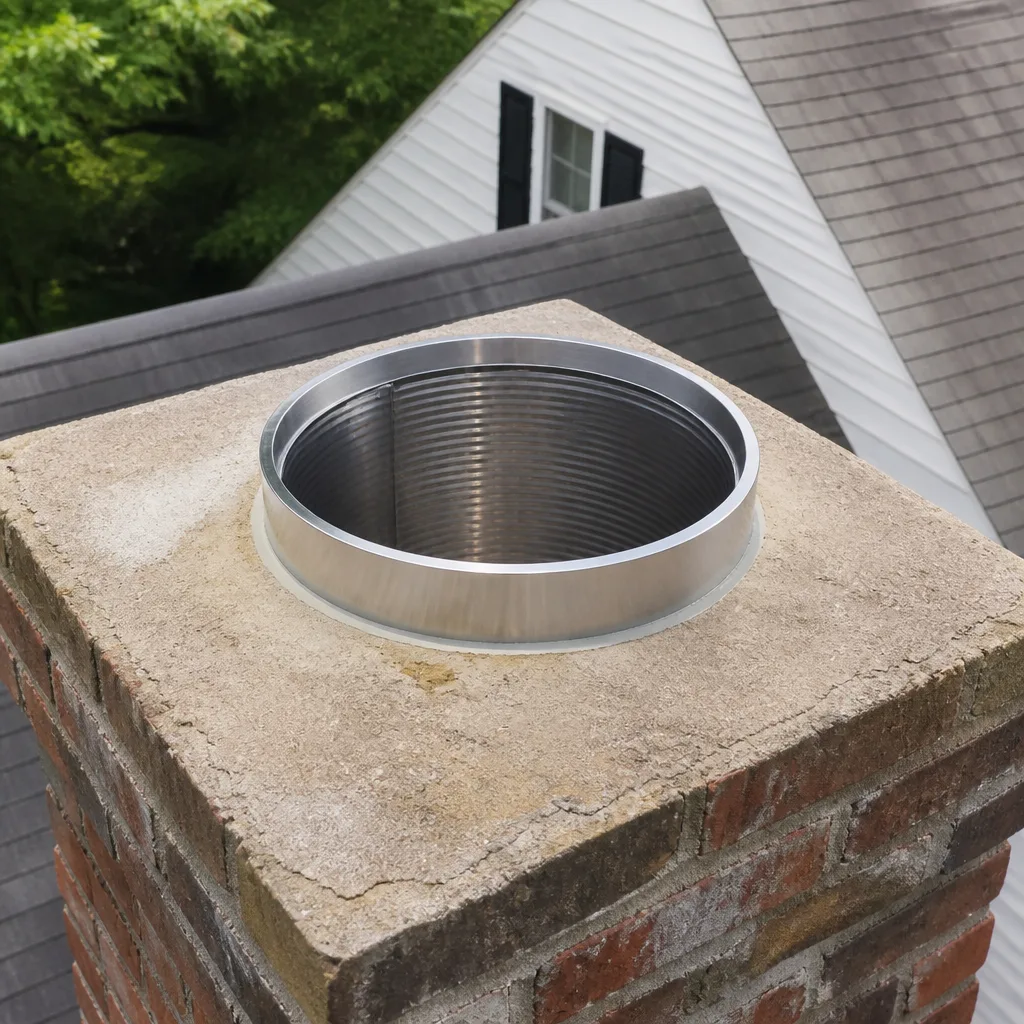
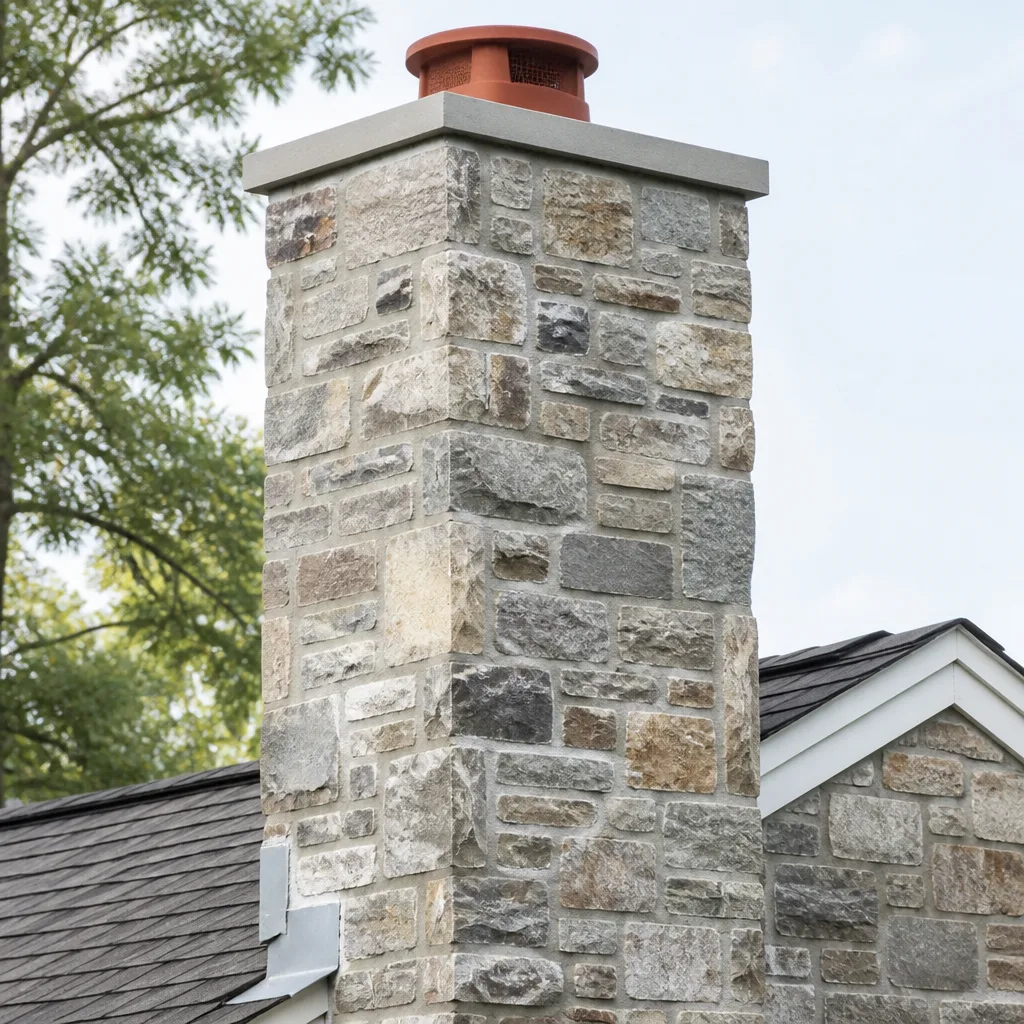
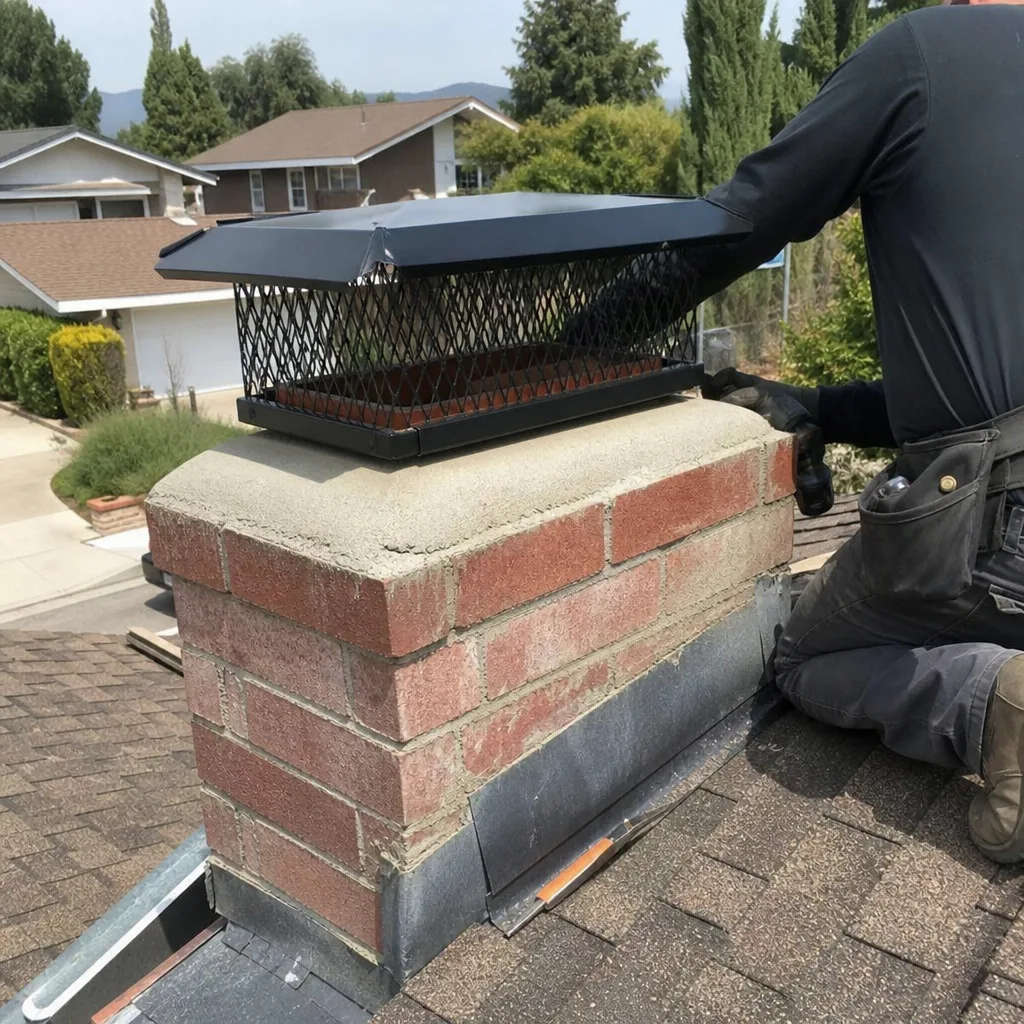
Level 1 sweep and inspection to the NFPA 211 annual standard - flue, crown, cap, and flashing checked and photographed
Chimney sweep logs do not sweep chimneys. They loosen some creosote - which then falls where a brush and vacuum still have to collect it.
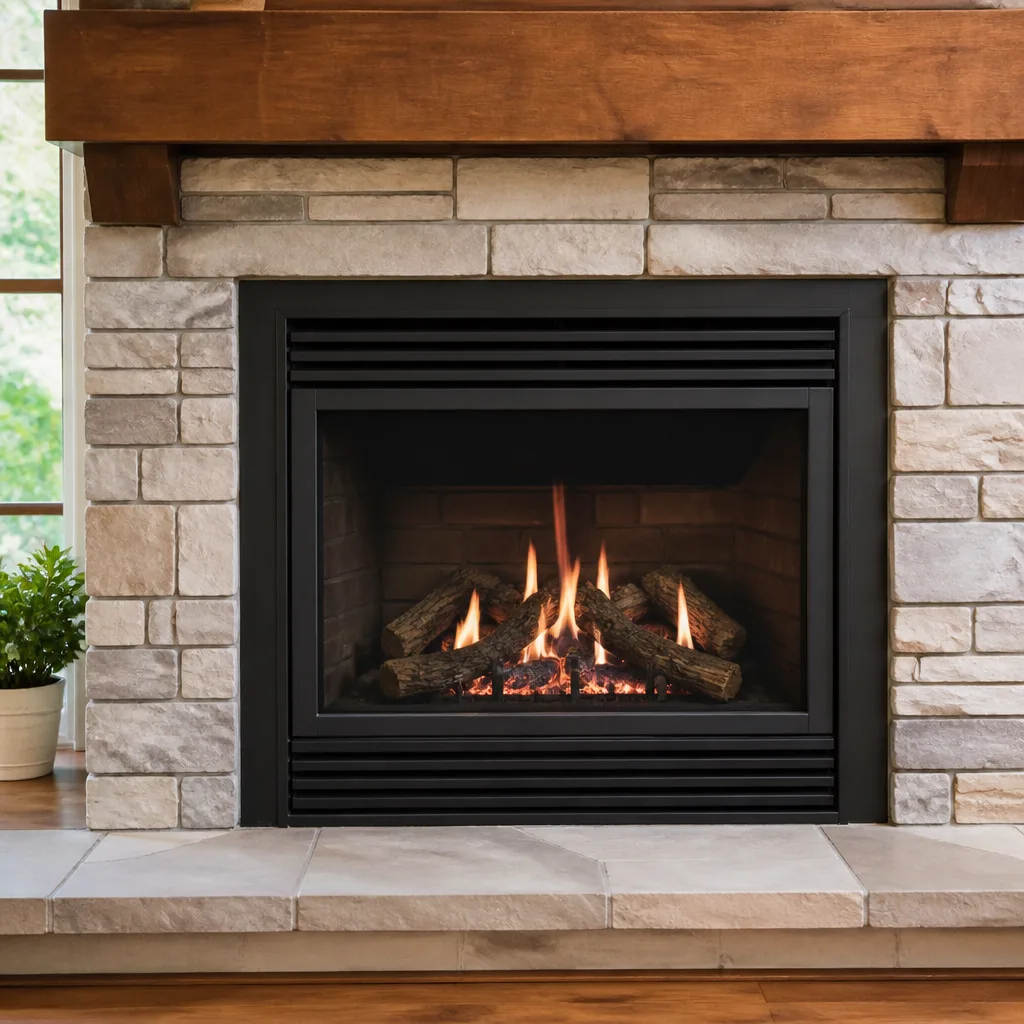
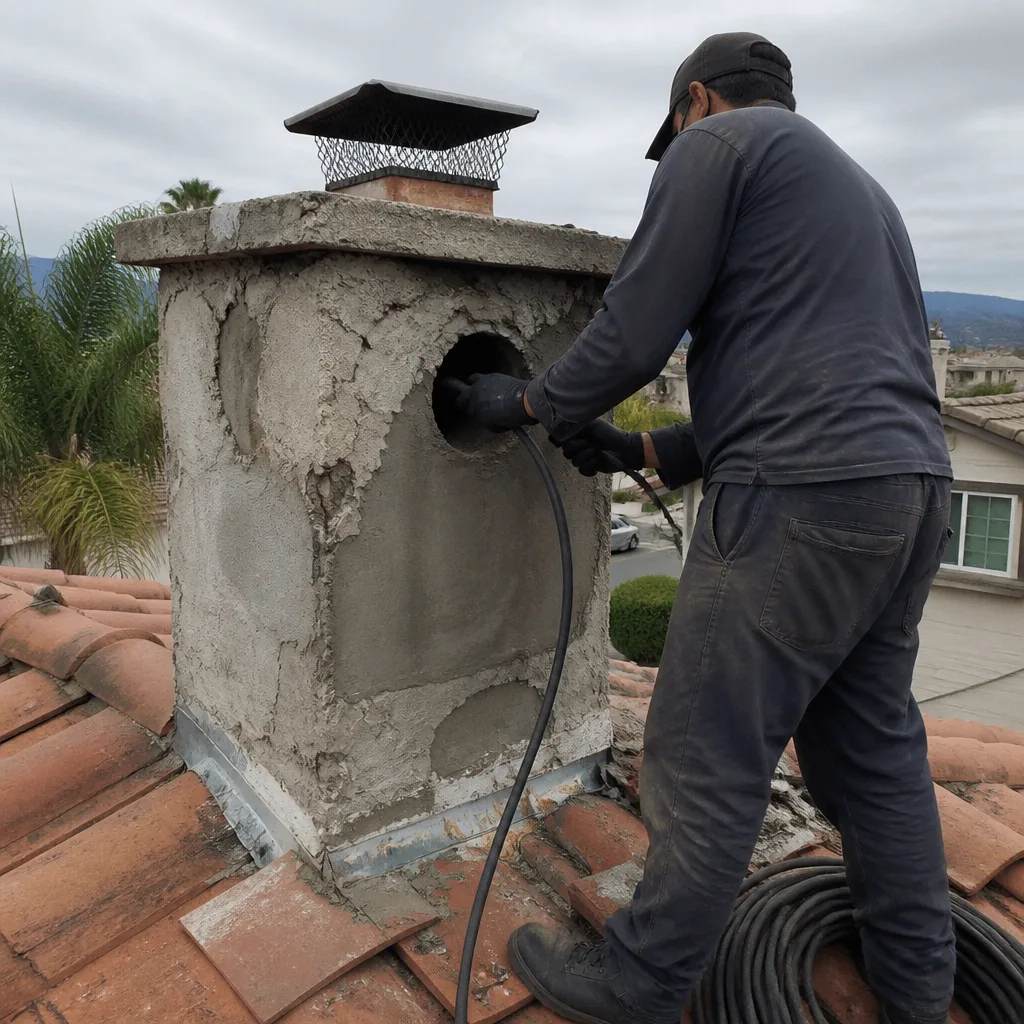 Before
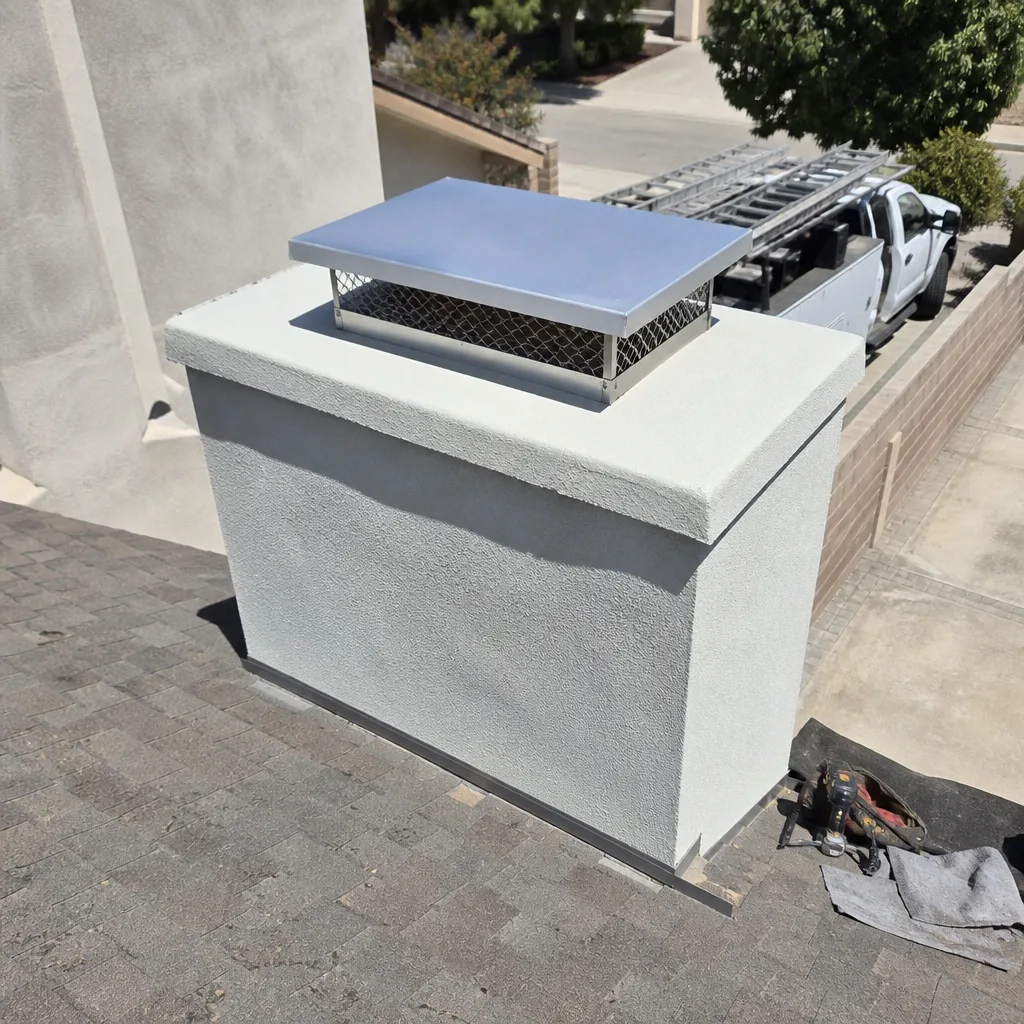 After
After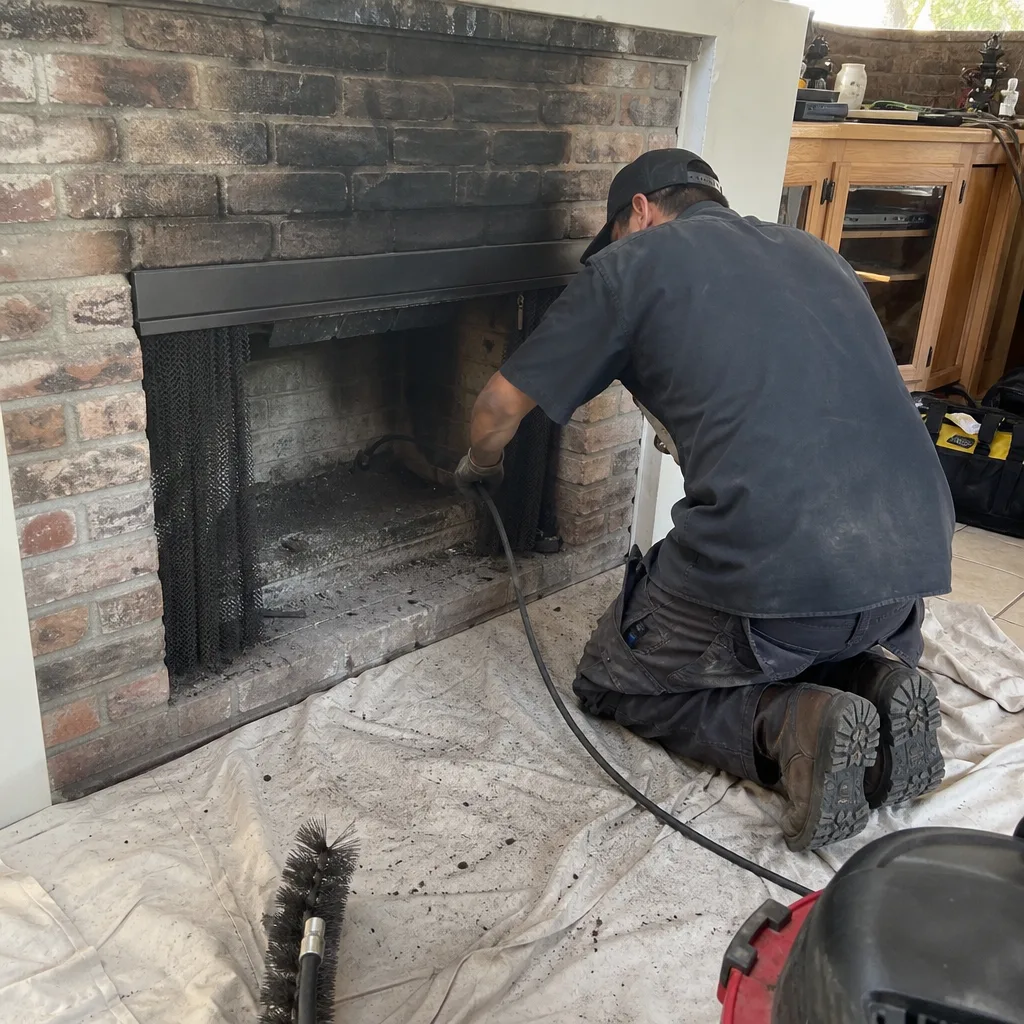 Before
 After
After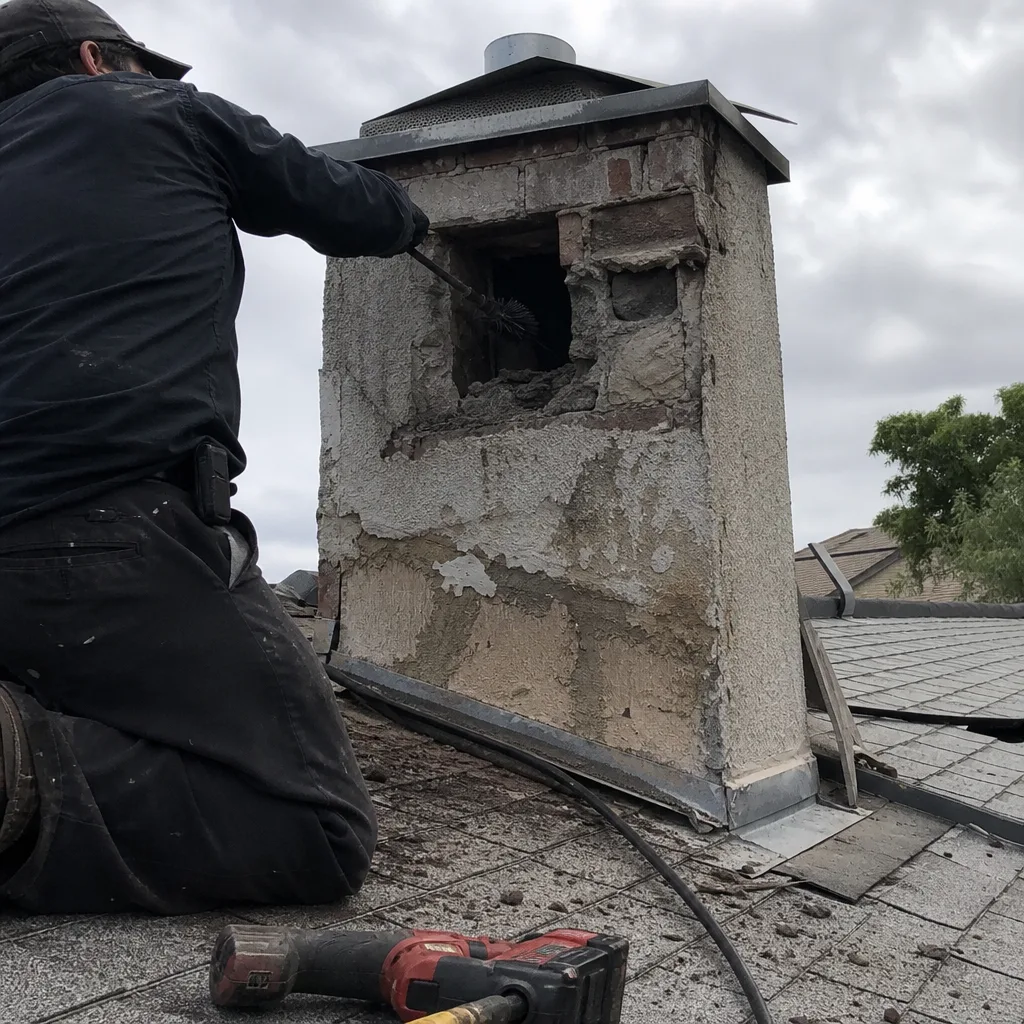 Before
 After
AfterSoot Removal in Rancho Cucamonga, CA
Soot removal in Rancho Cucamonga typically runs between $129 and $349 – see How Much Does Chimney Sweep Cost? (2026 Price Guide) - Rancho Cucamonga, CA for full details – depending on how much accumulation is present and whether the smoke chamber or flue liner requires attention beyond a standard sweep. Most jobs are completed in a single visit, with a written price delivered before anyone touches your fireplace.
Soot is the soft, powdery black residue that forms every time wood or gas burns incompletely. Left alone, it builds up on the firebox walls, smoke shelf, and inside the flue liner – restricting airflow, staining masonry, and creating the conditions for more dangerous deposits like creosote to take hold. If your fireplace smells smoky when it’s not in use, leaves dark smudges near the damper, or has visible black buildup on the firebox floor, that’s soot telling you something.
At Emberly Chimney Cleaners Rancho Cucamonga, soot removal is part of every Chimney Sweep in Rancho Cucamonga we perform – not a separate upsell, not a surprise line item. Corrine Halstead built this operation to document what’s actually in your chimney before and after the work, which is why every visit includes a camera-scan inspection and a photo record when we’re done. If you’d rather talk through what you’re seeing first, call us at (909) 430-9243 – a live person picks up, any time of day.
When You Need Soot Removal
- Smoky odor without an active fire. In Rancho Cucamonga, summer heat is one of the most common triggers for this – when outdoor temperatures push above 100°F, warm air forces its way down the flue and carries soot odors into living spaces. If your home smells like a campfire in July, accumulated soot is usually why.
- Black staining around the firebox opening or on the mantel. Soot that migrates out of the firebox is a draft problem and a buildup problem at the same time. The stains are cosmetic evidence of a functional issue worth addressing.
- Reduced draw or smoke rolling back into the room. Even a modest soot layer on the smoke shelf or inside the smoke chamber narrows the passage air needs to travel. In a tightly built home – common in the newer construction throughout Etiwanda and the Victoria Gardens area – that restriction shows up as poor draft fast.
- It’s been more than 12 months since your last cleaning. The National Fire Protection Association (NFPA 211) recommends annual inspection and cleaning for any chimney in regular use. Rancho Cucamonga’s dry high-desert climate means fireplaces often see heavy use from October through March, which is enough burn time to accumulate a meaningful soot layer.
- You’ve switched fuel types or are moving into a home you didn’t own before. Wood fires, gas inserts, and pellet stoves each produce different residue profiles. If you’re not sure what the previous owner burned or how often, a camera inspection before your first fire is the only way to know what’s in there.
- Visible buildup inside the firebox you can see from the hearth. If you can crouch down, look up into the throat damper area, and see a thick black coating on the damper blade or smoke shelf, that’s not a minor issue – that’s soot accumulation that’s already affecting draft and is one step away from becoming Class I creosote.
Our Soot Removal Process
- Written scope and price before work begins. Under Haven Standard Clause 1 – what we call H.A.V.E.N. “Have it in writing” – you receive a written price, written scope, and written warranty before the first tool comes out of the truck. No estimates delivered after we’re already in your home, no verbal quotes that shift when the invoice arrives.
- Camera-scan inspection of the flue liner and smoke chamber. We run a camera down the flue first. This lets us see the actual deposit depth, note any liner cracks or spalling (flaking of the flue tile surface) that soot can mask, and confirm whether what we’re dealing with is straightforward soot or the beginning of Class I or Class II creosote – which requires different handling. This camera documentation has been our default since 2009, and it became Clause 4 of the Haven Standard because it’s the only way to know what you’re actually cleaning before you start.
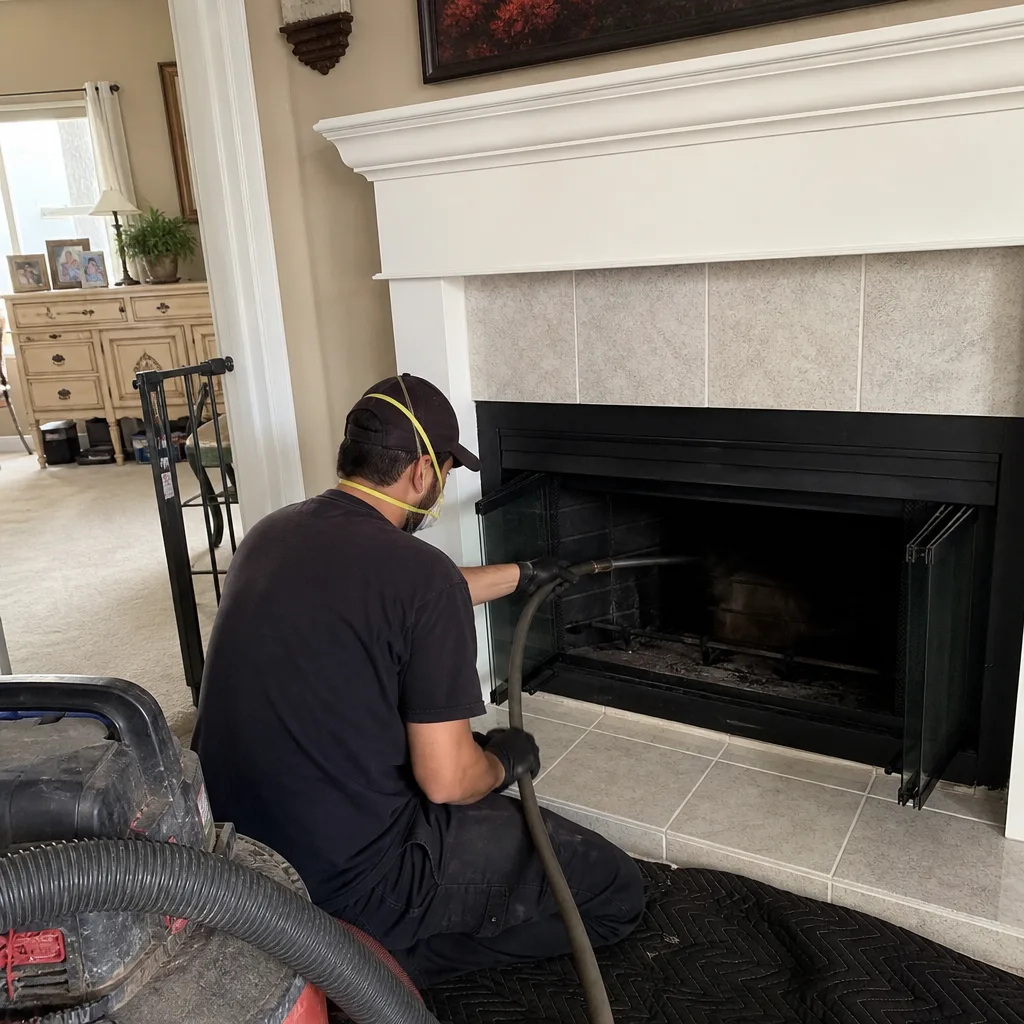
- Firebox and smoke chamber cleaning. We seal off the firebox opening with a drop cloth and HEPA-filtered vacuum setup to keep fine soot particles from migrating into your living space. The firebox walls, floor, and smoke shelf are cleaned using chimney brushes and hand tools sized to your specific firebox dimensions. In smoke chambers with parge coating – a smooth mortar interior coat applied in older masonry systems – we take care not to disturb any intact sections while clearing the soot.
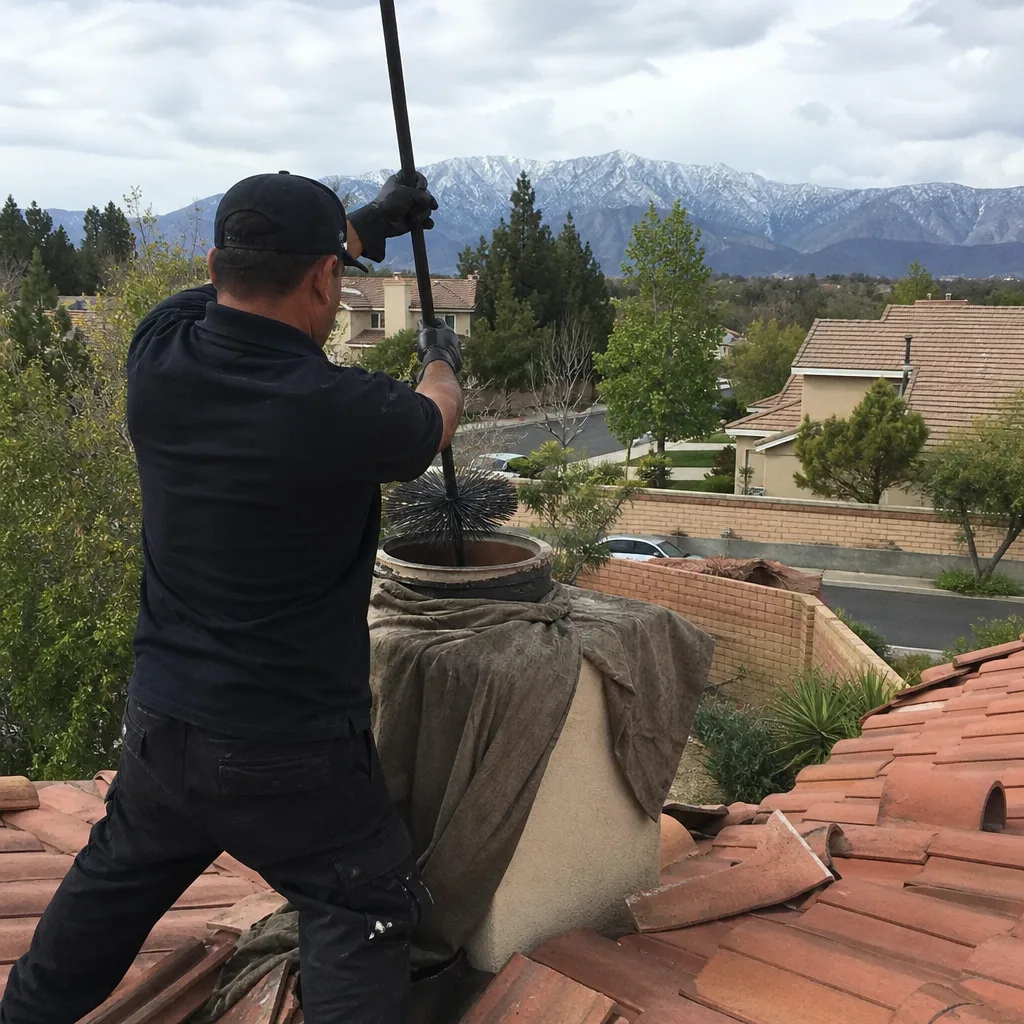
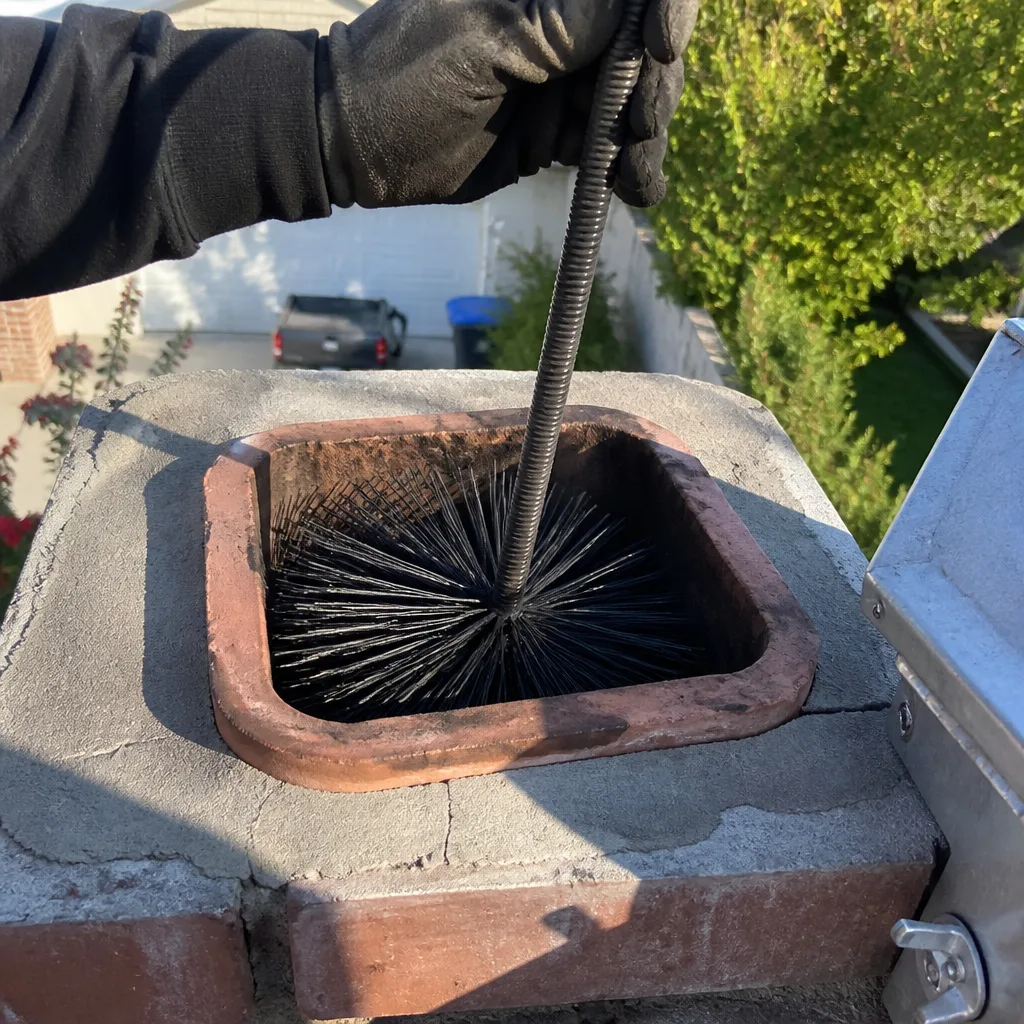
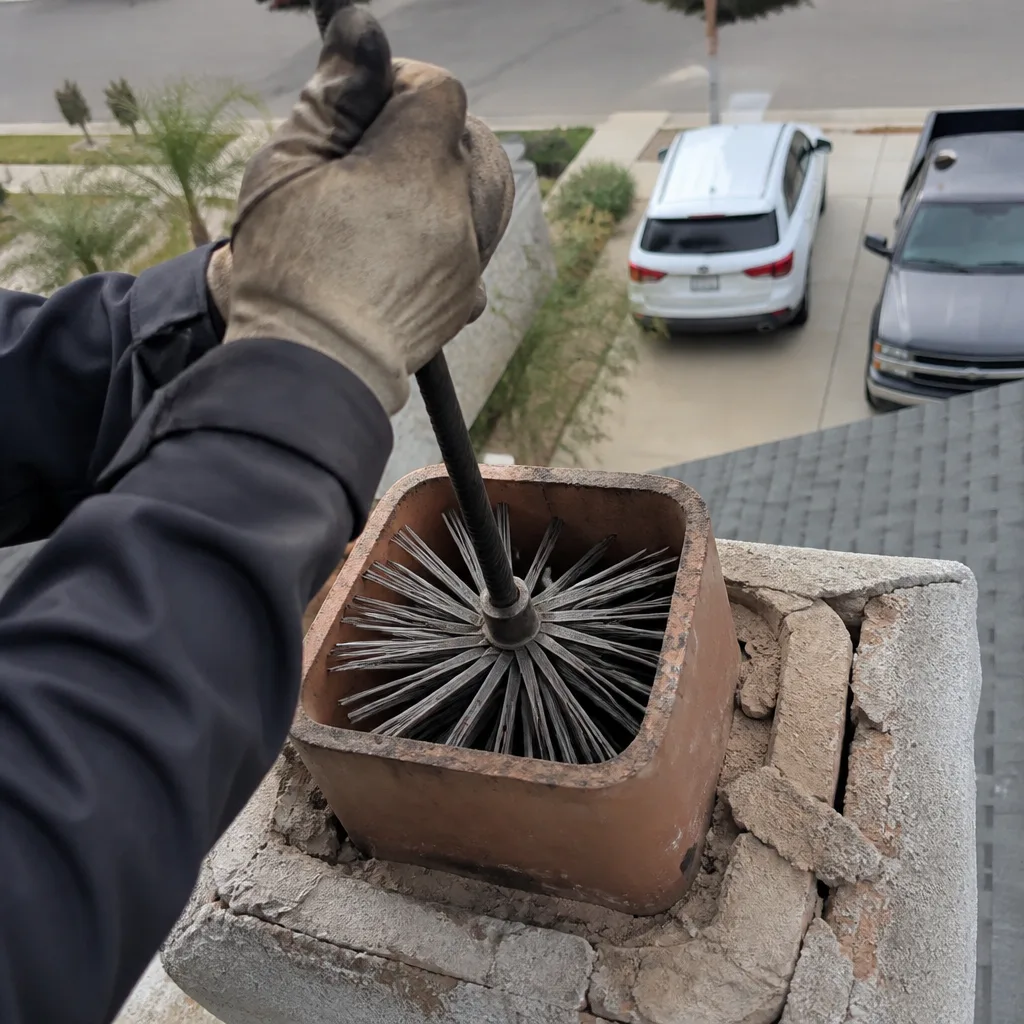
- Flue liner sweep from the top down. Rotary or rod-and-brush equipment works from the crown down through the flue liner, dislodging soot that has settled on the liner walls and breaking up any soft deposits at the base. For flues lined with Gelco stainless liner sections or older clay tile, brush size is matched to the liner diameter so we’re not leaving strips of buildup along the corners.
- Final camera confirmation and photo record. Once cleaning is complete, the camera goes back in. We compare before and after. You see both sets of images. The photo record is yours – delivered as standard under Haven Standard Clause 4, not an optional upgrade. If the after-images show something that needs a follow-up (a liner crack that soot had been hiding, for example), we tell you in plain terms and price out the repair in writing before you decide anything.
- Written summary and 365-Day Done Right Promise. Before the truck leaves, you have a written summary of what was found, what was done, and what – if anything – needs attention next. Every job is backed by our 365-Day Done Right Promise: if something wasn’t done right, we make it right. That promise is on the paperwork, not just on the website.
BeforeAfterSoot Removal Pricing in Rancho Cucamonga
Soot removal as part of our Chimney Sweep services in Rancho Cucamonga falls in a predictable range for most homes. Here’s how pricing typically breaks down:
| Scope of Work | Typical Price Range |
|---|---|
| Single fireplace – standard soot sweep (firebox + flue) | $129 – $199 |
| Smoke chamber cleaning included (heavier soot buildup) | $199 – $279 |
| Extended flue (two-story or split-level homes) | $229 – $299 |
| Second fireplace on the same visit | Add $89 – $129 |
| Camera-scan inspection (NFPA 211 Level 2) | Included on every visit |
A few things affect where your job lands in that range. Homes in the older sections of Rancho Cucamonga – particularly in the Alta Loma area, where masonry fireplaces from the 1970s and 1980s are common – sometimes have unconventional smoke chamber geometry that takes longer to clean properly. Two-story homes throughout the Day Creek corridor often have longer flue runs, which affects sweep time. And if soot has been left long enough to begin hardening into Class I creosote (a glazed or tar-like layer), that’s a different service with different chemistry and pricing – we’ll tell you upfront which one you’re looking at after the camera inspection, before any work begins.
We do not charge a separate inspection fee and then quote cleaning on top. The camera inspection is included. The price you’re quoted covers the full job. Call (909) 430-9243 to schedule, and we’ll give you a written estimate before we start – that’s not a policy we make exceptions to.
FAQs – Soot Removal
How often should soot be removed from a chimney in Rancho Cucamonga?
An Annual Sweep is the baseline for any chimney used regularly – NFPA 211 sets that standard, and it holds in Rancho Cucamonga’s climate. The Inland Empire’s dry winters mean most homeowners run their fireplaces hard between late October and early March. That burn season is typically enough to warrant a cleaning before the following season starts. If you’re burning more than three to four cords of wood per year, or using a gas insert as a primary heat source, twice a year isn’t unreasonable. Call (909) 430-9243 and we can tell you what frequency makes sense for your specific setup.
Is soot different from creosote, and does that change what the cleaning costs?
Yes, soot and creosote are different things, and the distinction matters for pricing. Soot is the soft, dry, powdery residue from incomplete combustion – it brushes out relatively easily. Creosote is what soot becomes when flue gases condense on cooler liner surfaces: it starts as a flaky residue (Class I), progresses to a tar-like coating (Class II), and can harden into a glaze (Class III) that requires chemical treatment or mechanical removal to address. Standard soot removal covers Class I deposits at most. If the camera shows Class II or Class III creosote during your inspection, we’ll tell you that immediately and price the appropriate service in writing. You won’t find out mid-job that the scope changed.
Can soot damage the flue liner or firebox masonry?
Over time, yes. Soot is mildly acidic, and when it absorbs moisture – which happens in Rancho Cucamonga during the winter months when temperatures can swing 40 degrees between day and night – that acidity accelerates deterioration of mortar joints and clay flue tile. The spalling (surface flaking) we sometimes see on older clay liners in Alta Loma and Upland-adjacent homes is partly a moisture problem and partly a long-term soot-acid problem. Catching it at the soot stage is significantly less expensive than addressing liner damage later. That’s exactly what the camera inspection is for.
Do you protect the room from soot dust during cleaning?
Yes, and this is non-negotiable for us. The firebox opening is sealed with a drop cloth and connected to a HEPA-filtered vacuum before any brushing starts. Fine soot particles are small enough to travel through standard HVAC filters and settle throughout a room if the cleaning isn’t contained properly. We don’t cut corners on containment because the cleanup liability if we did would fall on us under the 365-Day Done Right Promise – and more practically, because you’d know immediately if soot ended up on your furniture. Our techs work clean, and the photo record documents the condition of your hearth area before and after.
Why Rancho Cucamonga Homeowners Choose Emberly Chimney Cleaners
Emberly Chimney Cleaners Rancho Cucamonga isn’t named for a marketing concept. The name refers to the NFPA 211 Level 2 inspection standard: camera down the flue, written findings, documented photo record. Corrine Halstead made that the default in 2009 – years before insurers started asking for it – because it’s the only way to give a customer an honest picture of what’s in their chimney.
Since then, we’ve completed more than 38,000 chimney inspections and cleanings across the region. Every single one started with a written price. Every one ended with a documented record. That’s not marketing language – it’s a number we can account for because the records exist.
If you’re searching Chimney Sweep Near Me in Rancho Cucamonga, CA, we work across the full city: Terra Vista, Etiwanda, Alta Loma, the Victoria Gardens corridor, Day Creek, and the older foothill neighborhoods up toward the base of the San Gabriel Mountains. Each of those areas has its own chimney profile – newer tract construction with prefab fireplaces, mid-century masonry systems, custom hillside homes with long or offset flue runs. We know what we’re likely to find in each of them, which means less surprises for you.
If you have a written estimate from another company, bring it to us. We offer a free second opinion on any written quote – no pressure, no obligation.
Key Takeaways
- Soot removal in Rancho Cucamonga typically costs $129 to $349, with the final number depending on flue length, smoke chamber condition, and whether any deposits have progressed to creosote.
- A camera-scan inspection (NFPA 211 Level 2) is included on every visit – not a separate charge.
- You receive a written price, written scope, and written warranty before work begins – Haven Standard Clause 1, no exceptions.
- Soot left in place becomes creosote, which is harder to remove, more expensive to address, and a genuine fire risk.
- Every completed job is backed by the 365-Day Done Right Promise.
- Rancho Cucamonga’s climate – dry summers, cooler winter nights, significant temperature swings – makes annual cleaning more important here than in mild coastal areas.
- Live phone support is available 24/7 at (909) 430-9243.
Schedule Your Soot Removal in Rancho Cucamonga
If your fireplace has visible soot buildup, a smoky smell, or it’s been more than a year since your last cleaning, the right next step is a camera inspection and written quote – in that order. We don’t give you a price and then find reasons to add to it once we’re inside. The written price comes first, every time.
Call (909) 430-9243 to schedule. A live person will answer, get you on the calendar, and confirm a tech and arrival window by text. The estimate is free, the camera inspection is included, and the photo record is yours when we’re done. That’s the standard we hold ourselves to on every job – including yours.
Written by Corrine Halstead, Owner at Emberly Chimney Cleaners Rancho Cucamonga, serving Rancho Cucamonga.